
TestCon Europe 2026

October 20-23

Vilnius & Online
TESTCON EUROPE 2026 Schedule AND SPEAKERS
| Date | Start Time | End Time | Session Type | Stage | Speaker | Title | Position | Company | Country | Keywords | Description | |||||
|---|---|---|---|---|---|---|---|---|---|---|---|---|---|---|---|---|
| 2026-10-20 09:00 - 17:00 (GMT+3) | 2026-10-20 | 09:00 | 17:00 | Workshop | Kastytis | Deploying and Testing Ephemeral Environments |  | Chris Harbert | Deploying and Testing Ephemeral Environments | Chris Harbert | Founder | CEO of Testery | Podcast Host | Conference Speaker | Testery | USA | Ephemeral Environments, CI/CD, DevOps, Test Automation | 1. Abstract 2. Agenda Module 1 — Introduction (09:30–10:25, 55 min) Module 2 — Branching Strategies (10:25–10:55, 30 min) Module 3 — Deploying Ephemeral Environments (11:20–13:00, 100 min) Module 4 — Test Data (14:00–14:50, 50 min) Module 5 — Creating Automated Tests (14:50–15:30, 40 min) Module 6 — Adding Tests to CI/CD (15:55–16:40, 45 min) Module 7 — AI-Driven Development (16:40–17:15, 35 min) 3. Objectives 4. Target audience and Prerequisites 5. Technical requirements from attendees Detailed setup instructions and the sample repository will be circulated to registered attendees approximately two weeks before the conference, including a one-command Docker Compose start-up and a pre-pull step so that nobody spends the first module downloading images. | Chris Harbert is an industry executive, international conference speaker, host of the Developers Who Test podcast, an MBA graduate and Founder & CEO of Testery.His passion for software test automation began nearly twenty years ago when he was a developer practicing test-driven development at a company that was an early adopter of Agile practices.Today, he shares this knowledge and experience with others to help teams ship higher-quality software faster — and have more fun doing it.https://chrisharbert.com/speaking | chris-harbert-deploying-and |
| 2026-10-20 09:00 - 17:00 (GMT+3) | 2026-10-20 | 09:00 | 17:00 | Workshop | Tadas Blinda | Navigating the Tool Acquisition Adventure |  | Jenna Charlton | Navigating the Tool Acquisition Adventure | Jenna Charlton | Developer Advocate | BrowserStack | USA | Tool Evaluation, Proof of Concept, Leadership | 1. Abstract 2. Agenda
3. Objectives
Individuals and co-workers involved in defining organizational needs, evaluating tools, participating in a POC, or selecting the tool that best fits their team. | Jenna Charlton is a software tester and developer advocate with over a decade of experience. They have spoken at a number of development and testing conferences and are passionate about risk-based testing, building community within agile teams, developing the next generation of testers, and accessibility (A11y).When not testing, Jenna enjoys going to punk rock shows and live professional wrestling events with her husband, Bob, as well as traveling and spending time with her cats. Her favorites are the three that share their home: Maka, Milton, and Excalipurr. | jenna-charlton-navigating-the |
| 2026-10-20 09:00 - 17:00 (GMT+3) | 2026-10-20 | 09:00 | 17:00 | Workshop | Šventaragis | Building The Star Ship Tester |  | Rick Tracy | Building The Star Ship Tester | Rick Tracy | Process Optimizer | HapCo | The Netherlands | Testing Fundamentals, Test Strategy, Test Maintenance, Exploratory Testing, AI-Assisted Testing, Simulation | 1.Abstract 2. Agenda 3. Objectives 4. Target audience and Prerequisites | Rick styles himself as a process optimizer, a term he made up after attempting to explain why a tester was coaching CEOs on quality. In this role, he helps individuals, teams, and organizations gain better insight into the quality aspects of their work and develop creative solutions to enhance quality in general. With a background in psychology, public and business administration, communications, and, of course, testing, Rick engages on every available level in order to find the most effective optimization methods for any process.Questions form the core of Rick's methods, including the Big Three:Does it work? Does it play well with others? Is it what people want?But above all, the most important question remains, “How can I help?”Rick lives in a tiny village in the Netherlands, preferring a quiet base from which to launch adventures. He enjoys games, books, walks, puzzles, and, above all, conversations. | rick-tracy-building-the |
| 2026-10-20 09:00 - 17:00 (GMT+3) | 2026-10-20 | 09:00 | 17:00 | Workshop | Jūratė | Shi(f)t Happens - Workshop |  | Mikko Vaha, Anssi Lehtelä | Shi(f)t Happens - Workshop | Mikko Vaha, Anssi Lehtelä | SW Development Lead | Senior QA Engineer | SOK | Finland | Quality Engineering, Shift-Left Testing, Shift-Right Testing, Ensemble Testing, Soft Skills, Team Collaboration | 1. Abstract
2. Agenda
3. Objectives
4. Target audience and Prerequisites | Mikko Vaha is a seasoned QA professional with over 20 years of experience navigating various software environments. From leading teams to diving into agile product development, he has done it all - and still enjoys every part of the journey. With more than nine years of hands-on leadership experience, Mikko is passionate about fostering a collaborative and enjoyable work environment where everyone can thrive. He believes in the power of teamwork and enjoys bringing diverse roles together to tackle challenges head-on.Anssi is a software tester, and product & team developer, who likes building products that make an impact. Also a football player, coach, referee and fa | mikko-vaha-anssi-lehtel-shift-happens |
| 2026-10-20 09:00 - 17:00 (GMT+3) | 2026-10-20 | 09:00 | 17:00 | Workshop | Liudas Vasaris | Load Testing and Observability with k6 and Grafana OSS |  | Pepe Cano, Edgar Fisher | Load Testing and Observability with k6 and Grafana OSS | Pepe Cano, Edgar Fisher | Developer Advocate | Grafana Labs | Spain | Load Testing, k6, Grafana, Performance Testing, Observability, Open Source | 1. Abstract 2.Agenda 3. Objective 4. Target audience and prerequizites 5 .Technical requirements A free Grafana Cloud account (https://grafana.com/auth/sign-up/create-user). Some exercises use Grafana Assistant, which requires a Grafana Cloud connection even though Grafana itself runs locally. | Pepe Cano is a Developer Advocate at Grafana Labs, where he helps developers and engineering teams adopt Grafana, k6, and open-source observability technologies through technical content, workshops, and community engagement. He was part of the founding engineering team behind k6 OSS, an open-source load testing tool used by organizations worldwide.His work focuses on observability, performance and reliability testing, and developer education, with an emphasis on practical, hands-on learning and open-source collaboration.Pepe lives in southern Spain, where he enjoys spending time with his family and exploring the outdoors through hiking, cycling, and other sports.Edgar Fisher is a Senior Frontend Engineer on the Reliability Testing team at Grafana Labs, working on the Grafana Cloud k6 plugin and k6 Studio. He enjoys creating tools that make performance testing easier and more approachable for developers.Based in Lithuania, Edgar spends his free time hiking, camping, and going on motorcycle adventures. | pepe-cano-edgar-fisher-load-testing |
| 2026-10-20 09:00 - 17:00 (GMT+3) | 2026-10-20 | 09:00 | 17:00 | Workshop | Eglė Žalčių Karalienė | Accessibility In the AI Era: A Practical Approach for Creating and testing Accessible Web Applications |  | Asaf Shochet Avida | Accessibility In the AI Era: A Practical Approach for Creating and testing Accessible Web Applications | Asaf Shochet Avida | Frontend Tech Lead | Evinced | Israel | Accessibility Testing, Playwright, AI-Assisted Testing, Frontend Testing, End-to-End Testing, MCP (Model Context Protocol) | 1. Abstract Worry not! That's what we're here for. In this hands-on workshop, we’ll equip you with the tools and techniques you need to test and create accessible web applications. We’ll explore the principles of inclusive design and learn how to test our websites using assistive technology to ensure that they work for everyone. We’ll cover topics such as semantic markup, ARIA roles, accessible forms, and navigation, and then dive into coding exercises where you’ll get to apply what you’ve learned. We’ll use automated testing tools to validate our work, AI tools to create and verify accessible components, and ensure that we meet accessibility standards. By the end of this workshop, you’ll be equipped with the knowledge and skills to create accessible websites that work for everyone, and you’ll have hands-on experience using the latest techniques and tools for inclusive design and testing. 2. Agenda
3. Objective 4. Target audience and Prerequisites 5. Technical requirements
| Asaf Shochet Avida is a front-end tech lead at Evinced, with 15+ years of experience under his belt, including front-end, back-end, and test automation (Go testing!), and a special place in his heart for shiny CI pipelines.He loves reading Harry Potter with his daughter, mentoring junior devs, and making bonfires with his family. | asaf-shochet-avida-accessibility-in |
| 2026-10-20 09:00 - 17:00 (GMT+3) | 2026-10-20 | 09:00 | 17:00 | Workshop | Baltaragis | From Zero to Maintainer: Contributing to Open Source Projects | 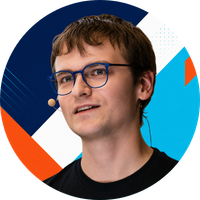 | Francois Martin | From Zero to Maintainer: Contributing to Open Source Projects | Francois Martin | Senior Full Stack Software Engineer | Karakun AG | Switzerland | Open Source, Open Source Contribution, Open Source Maintainer, Continuous Integration | 1. Abstract Open source powers much of the software we use, yet knowing where to begin can be intimidating. In this hands-on workshop, participants learn how to find welcoming projects, identify useful contributions, and navigate the process from an issue to a reviewed pull request. Contributions go beyond code: tests, documentation, reproducible bug reports, and reviews all make a difference. Participants assess real repositories and practise the GitHub contribution workflow, including forking, branching, making changes, and submitting a pull request to a workshop project. They then take the maintainer's perspective: setting up a contributor-friendly repository, working with issue and pull request templates, using CI checks, reviewing changes, and simulating issue triage and releases. By experiencing both sides, participants leave better prepared to contribute to and maintain open-source projects. 2. Agenda 3. Objectives 4. Target audience and Prerequisites Participants should have basic programming knowledge, be comfortable working with source code and a terminal, and have basic Git experience, including cloning a repository, creating a branch, committing changes, and pushing to a remote. They should be able to make a small code or documentation change. No previous experience with GitHub forks or pull requests is necessary; these are covered during the workshop. | François Martin is a senior full-stack software engineer at Karakun AG in Switzerland, passionate about building high-quality applications. He is an Oracle ACE Associate and an active member of the Swiss Testing Board and ISTQB's Advanced and Expert Working Group, co-authoring the ISTQB Test Analyst v4.0 and the upcoming Security Test Analyst syllabus. He is also part of the content committee for the BaselOne conference.François co-authored the open-source JavaFX frameworks WorkbenchFX and PreferencesFX, and organizes Basel's Hackergartento to help developers get involved with open-source projects. He also regularly speaks at international conferences, sharing insights to inspire developers and improve software quality | francois-martin-from-zero |
| 2026-10-23 12:15 - 13:00 (GMT+3) | 2026-10-23 | 12:15 | 13:00 | Panel Discussion | iLUXE HALL | The Bugs We Prevent with Words: Documentation, Writing and Communication as QA Superpowers |  | Panel Discussion | The Bugs We Prevent with Words: Documentation, Writing and Communication as QA Superpowers | Panel Discussion | Join the panel discussion “The Bugs We Prevent with Words: Documentation, Writing and Communication as QA Superpowers,” featuring Alona Kovalenko, Ankan Das, Rick Tracy, and Ana Duarte, and moderated by Koen Van Belle. | panel-discussion-the-bugs | |||||
| 2026-10-22 11:20 - 12:05 (GMT+3) | 2026-10-22 | 11:20 | 12:05 | Panel Discussion | HALL 10 | The Human Side of Quality: Burnout, Pressure, and Psychological Safety |  | Panel Discussion | The Human Side of Quality: Burnout, Pressure, and Psychological Safety | Panel Discussion | Join the panel discussion “The Human Side of Quality: Burnout, Pressure, and Psychological Safety,” featuring Povilas Godliauskas, Natalia Romanska, Mikko Vaha, Dr. Eva Spieker, and Viktoria Neva. The session will be moderated by Jenna Charlton. | panel-discussion-the-human | |||||
| 2026-10-21 10:10 - 10:55 (GMT+3) | 2026-10-21 | 10:10 | 10:55 | Panel Discussion | HALL 6 | From Hype to ROI: What AI Is Really Changing in Software Testing |  | Panel Discussion | From Hype to ROI: What AI Is Really Changing in Software Testing | Panel Discussion | Join the panel discussion “From Hype to ROI: What AI Is Really Changing in Software Testing,” featuring Adam Sandman, Francois Martin, Łukasz Pietrucha, Aidos Kenessov. The session will be moderated by Vaclav Broz. | panel-discussion-from-hype | |||||
| 2026-10-20 18:30 - 19:30 (GMT +3) | 2026-10-20 | 18:30 | 19:30 | Guided Tour | Monument to Grand Duke Gediminas | Vilnius Old Town |  | A Guided Tour | Vilnius Old Town | A Guided Tour | Vilnius Old Town, Guided Tour, History, Architecture | Join us for a guided tour through Vilnius Old Town and discover its history, architecture, and hidden stories together with fellow conference attendees. The meeting point is at the Monument to Grand Duke Gediminas. | a-guided-tour-vilnius-old | ||||
| 2026-10-21 17:00 - 19:25 (GMT +3) | 2026-10-21 | 17:00 | 19:25 | Movie | HALL 9 | Resident Evil |  | A Special Screening | Resident Evil | A Special Screening | Resident Evil, Survival Horror, Zombies, Suspense, Action, Post-Apocalyptic | Join us for an unforgettable cinematic experience with Resident Evil (2026) — a tense survival horror filled with danger, suspense, and relentless action. Settle in and enjoy the terrifying journey together with fellow conference attendees. | a-special-screening | ||||
| 2026-10-22 10:10 - 10:55 (GMT+3) | 2026-10-22 | 10:10 | 10:55 | Talk | iLUXE HALL | How to Decide When to Jump Ship |  | Ada Pohl | How to Decide When to Jump Ship | Ada Pohl | Senior Test Consultant | Quality Minds | Germany | Job Change, Self-Reflection, Career Development, Personal Development | Ever had the feeling that your hard work is not seen? That there is no room to grow? Or that you have simply been laid off?Deciding when to switch jobs is one of the most critical career choices people face, yet it is often clouded by uncertainty and emotion. In this talk, Ada will explore the key factors that signal it is time to move on, balancing personal and professional growth with practical considerations. This might also help attendees notice when a layoff is on the horizon so they can be prepared.Controlled leaving depends on two important aspects: the career prospects offered to a person and how they feel about leaving. But how can someone recognize the prospects they have or want? Identifying one’s own needs and wants is not easy. During this session, Ada will detail a three-step process that attendees can use to find out if it is time to jump ship and/or help them find something new:1. Evaluate their own worth and how they feel about their work 2. Map out the value of their current position 3. Decide whether the sum of the cost and value of staying is positiveWhether someone is unhappy or not, it is always good to evaluate their situation. Ada will use personal anecdotes to illustrate how attendees can use the tools provided to figure out what their worth is. Regardless of their situation, they will know how to make a decision in a way that will lead them toward personal fulfillment and success. ` | Ada is a Senior Test Consultant who has been building quality strategies since 2014. From XING’s Startpage through MOIA’s navigation system to consulting for Quality Minds, she loves technical challenges that require logical thinking and a quality mindset. When she is not using her quality mindset in tech, she loves to crochet stuffed animals and run around after her toddler. | ada-pohl-how-to |
| 2026-10-21 09:00 - 10:00 (GMT+3) | 2026-10-21 | 09:00 | 10:00 | Keynote | iMAX HALL | Adapting QA for the AI-Driven SDLC | 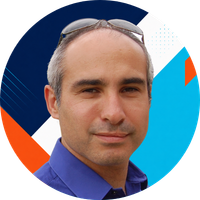 | Adam Sandman | Adapting QA for the AI-Driven SDLC | Adam Sandman | CEO | Founder | Inflectra | USA | AI, SDLC, MCP, Spec Driven Development | In this talk, the speaker will discuss the latest advances in agentic AI, including the move from the digital intern to the digital team, where software development activities are moving from an agile team working in squads to a digital factory. Agentic AI technologies such as Cursor, Kiro, and Cline are fundamentally reshaping how software is ideated, designed, developed, and tested. In this new approach, humans will be the digital supervisors, working to review the requirements and specifications and audit the development and testing agents. This will entail a shift from development and automation engineers back toward business analysts, generalists, quality assurance professionals, and risk management professionals. The speaker will include details on how this new multi-agent world will operate, using platforms such as MCP and A2A. Finally, the speaker will provide practical examples of how quality assurance (QA) and testing professionals can make sure these new AI systems are fit for purpose, safe, and have the necessary quality for release. The speaker will cover in depth the different agentic AI tools available and how they can be used to upskill for this new era in software delivery. | Adam Sandman has been a programmer since the age of 10 and has worked in the IT industry for the past 25 years in areas such as architecture, agile development, testing, and project management. Currently, Adam is the Founder and CEO of Inflectra Corporation, where he is interested in technology, business, and enabling people to follow their passions.At Inflectra, Adam has been responsible for researching tools, technologies, and processes in the software testing and quality assurance space.Adam has previously spoken at STAR West, STAR East, Agile+DevOps conferences, STPCon, Swiss Testing Day, InflectraCon, TestingMind, EuroSTAR, Agile Testing Days, TestCon Europe, UNICOM, GSDC, and STAR Canada. | adam-sandman-adapting-qa |
| 2026-10-23 13:50 - 14:35 (GMT+3) | 2026-10-23 | 13:50 | 14:35 | Talk | HALL 10 | Don't Be a Fool Mr. Bond: It Takes an Agent to Test an Agent | | Adam Sandman | Don't Be a Fool Mr. Bond: It Takes an Agent to Test an Agent | Adam Sandman | CEO | Founder | Inflectra | USA | Agentic AI, Test Agents, Judge Agents, Agentic AI, Test Agents, Judge Agents | Just like MI5 uses agents to test and find other agents that have gone rogue, when it comes to AI, we need to use the same approach. In this talk I will discuss the limitations of how we are current testing AI agents, and why this means we are not adequately ensuring the safety of agentic AI systems. With non-deterministic systems like Generative/Agentic AI, we need to simulate a large number of inputs (millions) and measure the outputs using judge agents to find the statistical success rate. This a process that is more similar to how we traditionally do load testing rather than the simple functional testing we’re using with AI right now. I will explain how you can instead use tools like AgentCore to create orchestration agents that build other types of agent to make this new type of non-deterministic testing possible. If you want to be ready for the next wave of QA, this talk is for you.Takeaways: 1. Current functional testing techniques are inadequate for testing agentic/generative AI systems 2. What does it mean to use LLM as Judge agents? What are input agents? 3. How can you create an AI testing orchestration pipeline for testing AI | Adam Sandman has been a programmer since the age of 10 and has worked in the IT industry for the past 25 years in areas such as architecture, agile development, testing, and project management. Currently, Adam is the Founder and CEO of Inflectra Corporation, where he is interested in technology, business, and enabling people to follow their passions.At Inflectra, Adam has been responsible for researching tools, technologies, and processes in the software testing and quality assurance space.Adam has previously spoken at STAR West, STAR East, Agile+DevOps conferences, STPCon, Swiss Testing Day, InflectraCon, TestingMind, EuroSTAR, Agile Testing Days, TestCon Europe, UNICOM, GSDC, and STAR Canada. | adam-sandman-dont-be |
| 2026-10-21 10:10 - 10:55 (GMT+3) | 2026-10-21 | 10:10 | 10:55 | Talk | iMAX HALL | A Tester’s Guide to Claude Code: From Setup to Scripting | 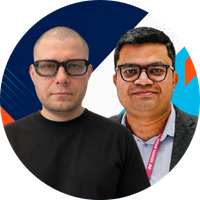 | Adonis Celestine, Taras Lytvyn | A Tester’s Guide to Claude Code: From Setup to Scripting | Adonis Celestine, Taras Lytvyn | Senior Director | Lead SDET | Applause | Netherlands | Claude Code, AI-Assisted Testing, Test Automation, AI Agents | Speed is easy. Reliability is the real challenge. Claude Code can generate test scripts in seconds. But speed without a framework is just a shortcut to AI slop and enterprise risk.Testers starting with agentic AI have likely encountered the “hallucination hurdle.” It is the moment when code looks perfect on screen but fails as soon as it encounters a real-world edge case. To bridge the gap between AI velocity and actual quality, testers need a solid foundation.This session is designed for testers who need foundational guidance on using Claude Code for test automation in an enterprise context. Adonis Celestine and Taras Lytvyn focus on helping participants get up and running without exhausting their token budgets or compromising the integrity of their organisations’ sensitive databases. | Adonis Celestine is a Senior Director and Global Automation Practice Lead at Applause, where he partners with leading organizations to drive transformational change in their quality engineering and test automation practices. He focuses on aligning technological innovation with customer-centric strategies and integrating automation, artificial intelligence (AI), and machine learning into the testing lifecycle to help organizations streamline quality processes, reduce time to market, and improve operational efficiency.Taras Lytvyn has spent over 14 years building test automation solutions from the ground up for leading global companies. An expert in continuous integration and continuous delivery (CI/CD) and cloud-integrated frameworks, he now focuses on the practical intersection of quality assurance (QA) and artificial intelligence (AI). Taras actively leverages AI agents, Model Context Protocol (MCP) servers, and “vibe coding” to streamline the testing and delivery of complex, multi-component projects. | adonis-celestine-taras-lytvyn-a-testers |
| 2026-10-21 15:30 - 15:50 (GMT +3) | 2026-10-21 | 15:30 | 15:50 | Coffee Break | FOYER | Snacks, Beverages & Networking |  | Afternoon Break | Snacks, Beverages & Networking | Afternoon Break | Coffee, Refreshments, Networking, Recharge, Relaxation, | An afternoon break is just what you need to beat that post-lunch slump. It's the perfect chance to grab a coffee, take a breather, or chat with someone before diving back into sessions. | afternoon-break-snacks-beverages | ||||
| 2026-10-22 15:30 - 15:50 (GMT +3) | 2026-10-22 | 15:30 | 15:50 | Coffee Break | FOYER | Snacks, Beverages & Networking |  | Afternoon Break | Snacks, Beverages & Networking | Afternoon Break | Coffee, Refreshments, Networking, Recharge, Relaxation, | An afternoon break is just what you need to beat that post-lunch slump. It's the perfect chance to grab a coffee, take a breather, or chat with someone before diving back into sessions. | afternoon-break-snacks-beverages-2 | ||||
| 2026-10-22 13:50 - 14:35 (GMT+3) | 2026-10-22 | 13:50 | 14:35 | Talk | HALL 10 | Backend Test Automation at a Large Broker |  | Aidos Kenessov | Backend Test Automation at a Large Broker | Aidos Kenessov | Automation QA Engineer | EXANTE | Kazakhstan | Test Automation, pytest, Python, CI/CD, Observability, Microservices | Testing a financial trading platform means combining strict precision requirements, real-time data, shared environments, and parallel execution at scale. In this session, Aidos Kenessov will walk attendees through how the QA team at EXANTE - a European multi-asset broker - built and evolved a Python and pytest test automation framework covering dozens of back-end microservices.The talk is structured around four practical pillars: layered test architecture with strict naming conventions, idempotent test data through the Setupers Pattern, reliable execution via smart retry decorators and parallel pytest-xdist runs, and end-to-end observability connecting Slack alerts to Allure reports and Jaeger distributed traces.Attendees will see real code examples from the framework, a war story of how blanket test reruns nearly destroyed team trust in regression results, and concrete metrics - including how a combination of file splitting, retry decorators, and smart waits brought a critical test suite from 20–25 minutes down to two minutes, making it 8.5 times faster.By the end of the session, attendees will understand how to organize a large test suite using clear architectural layers, how to design test data that survives shared environments and parallel execution, how to replace flaky `sleep()` calls with deterministic waits, and how to instrument tests with OpenTelemetry so any failure can be traced across microservices in seconds. The session emphasizes patterns that scale - applicable beyond fintech, in any domain with multiple services and strict reliability requirements. | Aidos Kenessov is an Automation QA Engineer at EXANTE, a European multi-asset broker, where he focuses on back-end test automation for trading and financial services. He works with a large Python and pytest framework spanning dozens of microservices, contributing to test architecture, idempotent data setup, and continuous integration/continuous delivery (CI/CD) reliability. In May 2026, he delivered his first conference talk at the Serbian QA Hub Belgrade meetup on back-end test automation at scale. | aidos-kenessov-backend-test |
| 2026-10-22 11:20 - 12:05 (GMT+3) | 2026-10-22 | 11:20 | 12:05 | Talk | iLUXE HALL | Measuring the Agent: An Experiment-Driven Look at TDD, BDD, and 'No Testing' | 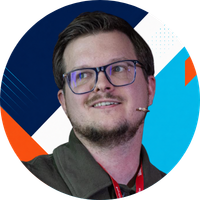 | Almantas Karpavičius | Measuring the Agent: An Experiment-Driven Look at TDD, BDD, and 'No Testing' | Almantas Karpavičius | Engineering Manager | Nord Security | Lithuania | AI-Assisted Development, TDD (Test-Driven Development), BDD (Behavior-Driven Development), AI Agents, Quality Metrics | Almantas Karpavičius explores how the shift toward agentic development has flipped the bottleneck: teams now spend more time reviewing AI-generated code than they ever spent writing it manually. When an LLM becomes the primary author of a codebase, he questions whether traditional clean code principles accelerate the agent or simply increase token overhead. Almantas presents a comparative series of agentic workflows used to build Arcanum Audio - a multi-track audio mixer mobile app. Attendees can expect to see multiple prototypes implemented using different workflows. In this session, attendees will:Quantify the reliability gap by comparing no-test, TDD, and BDD workflows using objective metrics such as build failures, features completed in one attempt, bugs, manual interventions, tokens used, context window size-to-quality ratio, and static analysis.Master agentic economics by learning how to manage token costs on a one-man-army budget while maintaining high-quality output.Audit the agentic stack by exploring how the choice of tools and models determines outcomes.Whether attendees are testers wondering if BDD is finally cool again, developers concerned about their craft, or leaders looking to scale output without increasing technical debt, they will see a series of live demos, concrete performance metrics, and the “bruised” results of building real software. | Almantas Karpavičius is a software craftsman with over 10 years of professional experience and is on a mission to elevate the standards of software development. He is the founder of C# Inn, a thriving community of 7,000+ programmers where peer-to-peer mentorship is the core focus.In addition to his community leadership, Almantas has developed two free C# boot camps and led over 20 coding dojo sessions. He enjoys sharing his expertise on software architecture and clean code, often exploring the intersection of technical excellence and collaborative frameworks such as Agile and Liberating Structures. Above all, he is a fan of high-quality automated tests and sustainable development practices.. | almantas-karpaviius-measuring-the |
| 2026-10-23 11:20 - 12:05 (GMT+3) | 2026-10-23 | 11:20 | 12:05 | Talk | HALL 10 | Introverts VS Extraverts: Who Breaks More Software? |  | Alona Kovalenko | Introverts VS Extraverts: Who Breaks More Software? | Alona Kovalenko | Senior Test Engineer | BEC Financial Technologies | Poland | Personality Types, Team Collaboration, Soft Skills, Psychology | In this presentation, Alona Kovalenko explores how personality diversity - introverts, extraverts, and ambiverts - shapes team performance, collaboration, and workflows in QA environments. She examines how different personality types process information, handle multitasking, and maintain focus during high-pressure testing tasks, such as managing large volumes of defects and tight deadlines.Drawing on real-world experience, Alona highlights practical strategies for optimizing task allocation, improving communication, and supporting team members based on their strengths. By incorporating psychological insights into QA practices, the talk demonstrates how teams can reduce cognitive overload, enhance collaboration, and improve overall product quality.Attendees will leave with actionable approaches to building more resilient, efficient, and cohesive QA teams through a better understanding of human factors. | Alona is a QA professional with more than eight years of experience in software testing and team coordination, mainly in banking and e-commerce. She has worked with Credit Europe Bank, Ubisoft, and BEC Financial Technologies. She also holds a second master’s degree in psychology, which shapes her human-centered approach to QA, with a focus on collaboration and process improvement. Outside of work, she enjoys sports, nature, and driving. | alona-kovalenko-introverts-vs |
| 2026-10-22 11:20 - 12:05 (GMT+3) | 2026-10-22 | 11:20 | 12:05 | Talk | HALL 6 | How to Create an Environment to Test Your Own AI |  | Alper Donmez | How to Create an Environment to Test Your Own AI | Alper Donmez | VP of Quality Assurance | Jotform | Turkey | AI Testing, AI Evaluation, Test Automation, Quality Assurance | This session explores how Jotform created a practical environment for testing its AI-powered products and workflows. As AI became integrated into more products, Jotform’s quality team moved beyond traditional pass/fail testing to evaluate relevance, consistency, safety, performance, and user value.The session covers environment separation, evaluation metrics, quality gates, non-deterministic outputs, CI/CD automation, production monitoring, and human-in-the-loop validation. It also introduces QA King, an internal AI testing companion focused on software quality, ISTQB, and test automation.Through practical examples and lessons learned, Alper will show how automation, observability, and human judgment can work together to build more reliable AI systems. | Alper Dönmez is the Vice President of Quality Assurance at Jotform, where he leads quality engineering, test automation, accessibility, and product reliability initiatives. With extensive experience across SaaS, fintech, defense, and pharmaceutical software, he focuses on building scalable quality processes and embedding accessibility throughout the product development lifecycle. He is particularly interested in AI-assisted testing, inclusive product development, and developing practical testing strategies that help teams deliver reliable and accessible digital experiences. | alper-donmez-how-to |
| 2026-10-21 12:15 - 13:00 (GMT+3) | 2026-10-21 | 12:15 | 13:00 | Talk | HALL 6 | The Hidden Cost of Bad Testing Documentation - and How to Fix It |  | Ana Duarte | The Hidden Cost of Bad Testing Documentation - and How to Fix It | Ana Duarte | Documentation Manager | Xray | Portugal | Test Documentation, Technical Writing, Knowledge Management | Testing documentation is often treated as a low-priority task, something teams plan to “get to later” or expect tribal knowledge to fill in. However, unclear, outdated, or overly technical test documentation carries a significant cost: wasted engineering hours, inconsistent test execution, onboarding delays, and gaps in test coverage that ultimately compromise product quality.In this session, the speaker unpacks the unseen impact of poor documentation and the patterns that contribute to it, from misaligned audiences to missing context and overly tool-driven writing. Through real examples, the talk explores how shifting the focus from “how to run a test” to “why this test matters” transforms the way teams collaborate and execute.Attendees will leave with actionable strategies, including reusable templates, audience-aware guidelines, and documentation review practices that strengthen test reliability and accelerate delivery. This talk positions documentation as a core quality artifact, not an afterthought, and demonstrates how teams can elevate their testing culture by writing with clarity and intent. | Ana Duarte is a writer, reader, and lifelong learner with a background in Communications and a strong passion for all things tech. She holds a BSc and a Master’s degree from Universidade da Beira Interior and Universidade do Porto, and further expanded her expertise with an Executive degree in Entrepreneurship,Management, and Innovation from Católica Lisbon School of Business and Economics.Ana is currently a Technical Documentation Manager at Xray.Her versatility spans multiple domains, from technology and sports to cinema, literature, and philosophy. With a broad and adaptable skill set, she is driven by a passion for writing, media, innovation, and the complexities of the tech world. | ana-duarte-the-hidden |
| 2026-10-21 12:15 - 13:00 (GMT+3) | 2026-10-21 | 12:15 | 13:00 | Talk | HALL 10 | Connecting the Dots: How End-to-End Chain Testing Safeguards Business Value |  | Ankan Das | Connecting the Dots: How End-to-End Chain Testing Safeguards Business Value | Ankan Das | IT Integrator (Domain Chain Test Manager and Tribe Test Lead) | ING Bank Netherlands BV | Netherlands | End-to-End Testing, Test Strategy, Test Data, Business Impact | What’s the Problem:Ankan Das explains that the need for a dedicated End-to-End (E2E) chain test of business functionalities is increasing due to several key challenges:1. Reliability: Unclear Testing Strategy: A lack of awareness about what, when, and how to test leads to inconsistent coverage and defect leakage. Poor Test Data Quality: Unrealistic or polluted data in lower environments causes unreliable test results. Limited Monitoring & Defect Triage: Minimal visibility into E2E test chain availability and no centralized defect resolution process reduce confidence in test outcomes. 2. Productivity: Manual Setup Effort: Preparing applications and configurations for chain testing requires significant manual work. Lack of Governance: No clear ownership or oversight slows coordination across teams and environments. Delayed Testing: Testing occurs too late in the lifecycle, often in expensive connected acceptance environments, reducing agility. 3. Cost: Late Defect Discovery: Bugs identified in later stages (system, acceptance, production) are exponentially more expensive to fix.Inefficient Resource Use: Manual effort and poor environment management lead to wasted time and resources. Data Pollution & Failures: Unrelated tests corrupt shared data, causing rework and failures that drive up costs.What’s the Solution: 1. Balance E2E with Unit & Integration Testing: Ankan emphasizes the importance of shift-left and shift-right techniques, as well as a mindset shift toward testing best practices. E2E tests should be executed only for critical paths. Avoid the “ice cream cone” anti-pattern (too many E2E tests). The recommended distribution is approximately 70% Unit, 20% Integration, and 10% E2E testing. 2. Better Management of E2E Chain Test Environments: Reliable and efficient chain testing requires a centralized and holistic overview of all acceptance environments involved. A comprehensive view should include: Environment usage planning Performance testing coordination Data refresh schedules Environment unavailability tracking 3. Definition of the Critical Core Chain: To ensure effective measures are taken, it is essential to identify the critical path of an E2E business process chain and give it special attention. 4. Automation of Core E2E Chain Tests: Set up an automated suite of core regression tests that run daily to determine the health of the E2E chains and enable dashboarding and monitoring of connected environments.Designing Robust End-to-End Business Test Strategies: Ankan encourages approaching E2E testing as black-box testing - validating outcomes from the user’s perspective without focusing on internal implementation details. A strong strategy ensures reliability, scalability, and efficiency.Key principles include: Prioritize by Risk Focus on high-impact, high-frequency workflows such as payments, onboarding, and critical user journeys. Work in Layers Fast smoke/sanity tests for pull requests and nightly runs. Comprehensive regression suites for major releases. This layered approach balances speed with depth. Break Up Tests Reduce redundancy by: Reusing objects and keywords. Separating data-driven tests from logic-based tests for better maintainability. Avoid Silos Use cross-platform automation tools to validate workflows across desktop, mobile, and web platforms, ensuring consistency in user experience. Manage Data Efficiently Incorporate synthetic data for flexibility. Implement structured test data management practices to ensure reliability and repeatability. Measure Success Track key metrics: Defect escape rates Test flakiness Environment stability Use these insights to continuously improve coverage and effectiveness.Key Takeaways for Attendees: Comprehensive Quality Assurance Understand why testing individual components is not sufficient and how testing complete business workflows reduces risk and improves customer experience. Business Alignment and Bridging the Gap Learn how end-to-end chain testing connects Quality Assurance (QA) efforts to business objectives. Operational Resilience Discover how comprehensive testing across interconnected systems prevents costly failures and strengthens production reliability. Scalable Strategies Gain insights into designing maintainable, automated test chains. Governance & Traceability Explore best practices for monitoring, reporting, and ensuring compliance in complex, multi-service applications and systems. | Ankan Das is a seasoned IT professional with over 21 years of experience in the Information Technology industry and more than 16 years of on-site client engagement across the Netherlands and the United States. He brings a strong track record in Change, Release, Test, and Project Management, with a deep commitment to automation, process optimization, and delivering resilient IT solutions.Throughout his career, Ankan has contributed to and led numerous initiatives spanning the full software development lifecycle, covering requirements analysis, solution design, development, testing, implementation, and post-deployment support.His expertise includes defining and maintaining robust IT project plans, coordinating cross-functional teams, managing complex stakeholder environments, and ensuring the successful delivery of functional and technical outcomes.He has played a key role in Chain Test Coordination, orchestrating end-to-end test cycles across multiple systems, interfaces, and business units to ensure seamless integration and readiness for production.His experience in planning, implementing, and governing application releases—both for new services and enhancements to existing IT landscapes—extends from initial concept through full production deployment and continuous improvement.Ankan has collaborated with diverse clients across industries including financial services, consulting, and retail. Notable organizations he has worked with include ABN AMRO Bank, ING Bank, Rabobank, SunTrust Bank, Hartford Financial Group, KPMG, and CVS Pharmacy.Exposure to large, distributed, and high-complexity environments has strengthened his ability to drive operational excellence, manage risks, and deliver value in mission-critical landscapes.His core areas of expertise include Test & Release Management, Chain Test Coordination, Change Management, and Project & Delivery Management. Ankan is recognized for his structured approach, analytical mindset, and ability to bring clarity, stability, and efficiency to complex IT transformation and delivery programs. | ankan-das-connecting-the |
| 2026-10-23 10:10 - 10:55 (GMT+3) | 2026-10-23 | 10:10 | 10:55 | Talk | iLUXE HALL | How Unit Testing Saved My Career |  | Annelore Egger | How Unit Testing Saved My Career | Annelore Egger | Software Engineer | OpenValue AG | Switzerland | Unit Testing, TDD (Test-Driven Development), Java, Integration Testing | When Annelore Egger first began programming, unexpected code behavior often led to frustration. It was only after discovering unit testing that things started to make sense. Testing not only validated the code but also encouraged clearer, more structured development practices.However, as her experience grew, new challenges emerged—particularly with overly complex unit and integration tests. In many cases, it became unclear what was actually being tested, and when tests failed, it was difficult to determine whether the issue lay in the code or the test setup itself. This ultimately eroded trust in the test suite.In this talk, Annelore shares key lessons learned from these experiences and explores how to harness the full power of testing without falling into the trap of overcomplication. Using JUnit and Mockito, she demonstrates how to write tests that are clear, purposeful, and aligned with real validation goals.She also discusses how designing for testability naturally leads to cleaner, more maintainable, and readable code—code that does more than just pass tests.Attendees will leave with practical strategies for building a testing approach that simplifies development and enhances code quality. Whether they are new to testing or have struggled with overly complex test suites, this session offers a roadmap to building confidence in tests that truly support the development process. | Annelore Egger is a passionate software developer from Switzerland who values high-quality code, enjoys working in teams, and loves sharing her knowledge. She also enjoys meeting new people—so if you see her around, feel free to say hi! | annelore-egger-how-unit |
| 2026-10-21 13:50 - 14:35 (GMT+3) | 2026-10-21 | 13:50 | 14:35 | Talk | HALL 10 | How We Captured Implicit System Knowledge Before Our Regression Expert Retired |  | Arthur van Leeuwen | How We Captured Implicit System Knowledge Before Our Regression Expert Retired | Arthur van Leeuwen | Senior Software Developer | Nedap NV | Netherlands | Regression Testing, Knowledge Management, Gherkin, BDD (Behavior-Driven Development), Legacy Systems | What if a team maintains a long-lived legacy system, where critical system knowledge is implicit, embedded in manual regression tests and in the heads of a few experienced team members, some of whom are approaching retirement? Arthur van Leeuwen and his team faced the risk of losing that knowledge and decided to counter it.This talk explains how Arthur and his team captured implicit system knowledge from their 25-year-old legacy application before their regression testing expert retired. Their regression test suite covered essential system behavior, but its intent was difficult to understand without years of accumulated context. Rather than focusing on test automation, they used Gherkin as a collaborative language to make that implicit knowledge explicit and accessible. They started translating their manual regression tests into Gherkin following commonly accepted best practices. It quickly became clear that generic guidance did not suffice. They wanted to specify behavior for human understanding, not for writing automated tests.Together, the team had to figure out what “good” specifications looked like for them. This required learning as a team, as well as individually. Furthermore, it meant looking beyond development and testing, and also involving documentation specialists. They agreed on terminology, partly derived from their user documentation, and on rules constraining how they formed sentences in Gherkin feature files.The resulting specifications reduced reliance on individual experts, enabled non-experts to perform regression testing with confidence, and exposed underdocumented behavior and previously unknown bugs. More importantly, they became a practical communication tool for the team. As a bonus, they also proved to be a good foundation for test automation. In this talk, Arthur distills these experiences into practical insights on how and why to introduce Gherkin as a shared specification language, define effective wording agreements, and use those agreements to make implicit knowledge explicit in long-lived legacy systems. | Arthur fell in love with computers and code as a kid and has been privileged enough to turn that love into a career. He spent some time in academia as a programmer and assistant professor, and now works at Nedap, where he gets to code, design architecture, and teach. | arthur-van-leeuwen-how-we |
| 2026-10-21 13:50 - 14:35 (GMT+3) | 2026-10-21 | 13:50 | 14:35 | Talk | iMAX HALL | Stop Talking About Coverage! A Practical Approach for Testing in Frontend Teams |  | Asaf Shochet Avida | Stop Talking About Coverage! A Practical Approach for Testing in Frontend Teams | Asaf Shochet Avida | Frontend Tech Lead | Evinced | Israel | Test Coverage, Quality Metrics, End-to-End Testing, Frontend Testing, Playwright, AI-Assisted Testing | The speaker notes that everyone has been there, proudly hitting high coverage while still shipping bugs. Coverage is easy to measure, but it is rarely the metric that actually matters.In this talk, the speaker will rethink unit tests and end-to-end (E2E) tests, and explore what is truly worth testing in frontend teams. The talk looks at how to build a testing approach that developers, managers, and product teams can actually trust.The speaker will also discuss how AI can be used to increase confidence and support better decisions without slowing development. Finally, the talk focuses on KPIs that reflect real quality, real confidence, and real impact on users. | Asaf Shochet Avida is a front-end tech lead at Evinced, with 15+ years of experience under his belt, including front-end, back-end, and test automation (Go testing!), and a special place in his heart for shiny CI pipelines.He loves reading Harry Potter with his daughter, mentoring junior devs, and making bonfires with his family. | asaf-shochet-avida-stop-talking |
| 2026-10-22 14:45 - 15:30 (GMT+3) | 2026-10-22 | 14:45 | 15:30 | Talk | iLUXE HALL | Trust Tax Index: From Process Friction to Product Quality |  | Asya Isakova | Trust Tax Index: From Process Friction to Product Quality | Asya Isakova | Organizational psychologist | Leadership Consultant | Co -Founder | Independent Consultant | Spain | Team Trust, Process Improvement, Leadership, Organizational Culture | Asya Isakova opens with a familiar scenario: Monday morning. A team lead opens Slack to three “just checking-in” messages about tasks she assigned on Friday. She answers, then sits through a thirty-minute stand-up where everyone reports what is already visible in Jira. After lunch, a developer’s two-line fix enters a review chain: tech lead, architect, and QA sign-off. The fix ships on Thursday.Nobody questions any of this - it all looks like a responsible process. But when added up, the check-ins, status ceremonies, approval chains, and tasks that bounce between people before someone owns them create a hidden tax. Teams with low trust do not stop delivering, but instead operate through friction: more monitoring, more handoffs, and more process armor. Every hour spent on friction is an hour not spent on the product.For quality engineers, this is not an abstract culture problem - it results in real quality debt. When trust is low, people over-document to protect themselves rather than help others. They ask for additional sign-offs because they do not fully trust previous reviews. They retest repeatedly due to lack of confidence in the environment, pipeline, or team. The cost appears in familiar forms: longer queues, more context switching, noisier defect triage, delayed feedback, and customer-visible issues that could have been caught earlier.This tax is largely invisible. It hides in calendars, ticket histories, and Slack threads. No dashboard shows hours spent chasing clarity or approval delays caused by unclear ownership. Instead, it accumulates through small, seemingly harmless delays - reviews waiting days, tickets bouncing between teams, and extended message threads where no one wants to admit uncertainty. Over time, this friction becomes normalized and is often mistaken for process maturity, when in reality it reflects a scarcity of trust.In this talk, Asya makes this cost visible. She studied these patterns across real teams by combining a short trust survey with friction metrics from commonly used tools. She identified consistent signals: lower trust correlates with more reopened tickets, longer approval cycles, increased status requests, and slower decision-making. She translates these signals into measurable time and cost, showing concrete examples of what trust tax looks like in practice.She presents a simple method to estimate the time consumed by these patterns and connects it to key quality outcomes such as delayed feedback, late risk discovery, and defects progressing further downstream than they should.Attendees leave with a Trust Tax Index - a practical approach to measuring team friction, converting it into cost, and demonstrating that trust is not a soft concept, but an economic one. | Asya Isakova is an organizational psychologist, scientist-practitioner, lecturer, and consultant working with IT teams and leaders. She has been studying and practicing how to make work a better place since 2007. Recently, she has focused on trust at work, bridging academia with hands-on leadership experience. Her main research question is: “How much does it cost to not trust?”Asya is known for her engaging and energetic style. She is skilled at turning complex scientific topics into clear, engaging talks with practical insights for the audience. | asya-isakova-trust-tax |
| 2026-10-21 08:00 - 09:00 (GMT +3) | 2026-10-21 | 08:00 | 09:00 | Registration | FOYER | Welcome Coffee |  | Check-In | Welcome Coffee | Check-In | Registration, Welcome Coffee, Networking, Conference 1st Day Start | Start the day by checking in, collecting your badge, and enjoying a fresh cup of coffee. It’s a relaxed opportunity to settle in, meet fellow attendees, and get ready for the sessions ahead. | checkin | ||||
| 2026-10-23 09:00 - 10:00 (GMT+3) | 2026-10-23 | 09:00 | 10:00 | Keynote | iMAX HALL | Capturing the Mythical Green Build |  | Chris Harbert | Capturing the Mythical Green Build | Chris Harbert | Founder | CEO of Testery | Podcast Host | Conference Speaker | Testery | USA | Automation, End-to-End, Strategies | For years, achieving 100% green end-to-end (E2E) test runs has felt like chasing a unicorn. In fact, many teams still do not believe it is feasible. Instead, they spend time each sprint reviewing failed tests, drastically scale back their testing scope, or abandon end-to-end tests altogether in favor of unit tests. Unfortunately, each of these approaches has significant drawbacks.At the same time, other teams are now consistently and reliably achieving 100% green end-to-end test runs. In this session, Chris Harbert challenges the conventional wisdom that 100% green end-to-end test runs are unattainable.Through practical strategies such as ephemeral environments, parallel testing, disciplined test code management, and cross-team collaboration, he demonstrates how high-performing teams achieve 100% green end-to-end test runs - not as a fluke, but consistently and reliably.The best part? Organizations do not need to abandon their current framework or rewrite everything from scratch.Chris explores the root causes of flaky tests and provides actionable techniques that can be implemented incrementally.Whether teams are overwhelmed by false failures or just getting started with E2E testing, they will leave with a roadmap to finally achieve a fully green build. | Chris Harbert is an industry executive, international conference speaker, host of the Developers Who Test podcast, an MBA graduate and Founder & CEO of Testery.His passion for software test automation began nearly twenty years ago when he was a developer practicing test-driven development at a company that was an early adopter of Agile practices.Today, he shares this knowledge and experience with others to help teams ship higher-quality software faster — and have more fun doing it.https://chrisharbert.com/speaking | chris-harbert-capturing-the |
| 2026-10-22 16:50 - 18:00 (GMT +3) | 2026-10-22 | 16:50 | 18:00 | AfterParty | FOYER | Networking Evening, Drinks, Games & Conversations |  | Conference Afterparty | Networking Evening, Drinks, Games & Conversations | Conference Afterparty | Conference Afterparty, Networking, Socializing, Drinks, Entertainment, Community Building, | Keep the conversations going at the conference’s networking evening! Join us at Forum Cinemas Vingis right after the sessions to meet fellow attendees, exchange ideas, and build connections in a relaxed, informal setting. Whether you’re catching up with new contacts or getting to know someone over a complimentary drink, there’s plenty of time to talk beyond the conference halls. Enjoy games and entertainment along the way - and leave with fresh perspectives and new connections! | conference-afterparty-networking-evening | ||||
| 2026-10-21 12:15 - 13:00 (GMT+3) | 2026-10-21 | 12:15 | 13:00 | Talk | iLUXE HALL | Synthetic Testdata on The Fly? Solved! |  | Dag Nygaard, Erik Rogstad | Synthetic Testdata on The Fly? Solved! | Dag Nygaard, Erik Rogstad | Senior Test Engineer | CTO | Testify AS | Norway | Synthetic Test Data, Domain-Specific Language, Test Data, Microservices | If organizations are looking for fresh ideas for bringing synthetic test data into development, testing, and automation workflows without losing human understanding and control, this session offers a practical perspective.Dag Nygaard and Erik Rogstad share how they approached test data generation in a large-scale microservice environment and how they made usable, consistent synthetic data available across the organization.To make test data generation accessible to people with varying technical skills, they built a domain-specific language (DSL) for specifying test data. The DSL, coupled with organizational information models, allows developers, testers, and analysts to express intent in familiar terms at the level of abstraction they require.Generators then transform these specifications into test data that populate test environments, integrate with automation frameworks, or create large, consistent datasets for performance and load testing.This approach has been implemented at the Norwegian Tax Administration, where it has been adopted across all development teams. It provides a shared, centralized method for working with test data, eliminating the need for custom scripts and enabling teams to request the data they need when they need it.The Norwegian Tax Administration has also released an open-source version as a foundation for automating test data generation.Regardless of role, attendees will leave the session with practical insights and inspiration for implementing synthetic, on-demand test data solutions. | Dag Nygaard is a Senior Test Engineer at Testify AS in Oslo, Norway. He has worked as a consultant in software development roles on many different projects since 1996.Fifteen years ago, he was persuaded to focus on testing. Since then, he has enjoyed the particular challenges of creating test automation scripts and test data to fit. And then some. When he is not working on test automation, performance testing, mentoring, or developing end-to-end (E2E) test tools and scripts, he can often be found walking his dog in the woods of Oslo .Erik Rogstad is the Chief Technical Officer at Testify AS and holds a PhD from Simula Research Laboratory in automated system and regression testing of database applications. He has a background as a software developer in large-scale development projects and is an expert in black-box system testing, regression testing, test data generation, and anonymization.Besides testing he is also passionate about football. In his spare time, he follows the English Premier League (EPL), coaches youth player, and plays in an amateur league. | dag-nygaard-erik-rogstad-synthetic-testdata |
| 2026-10-22 12:15 - 13:00 (GMT+3) | 2026-10-22 | 12:15 | 13:00 | Talk | iLUXE HALL | The Reality of Accessibility Automation |  | Daniel Angelov | The Reality of Accessibility Automation | Daniel Angelov | QA Domain Knowledge lead | JAKALA | Bulgaria | Accessibility Testing, WCAG, Test Automation, AI-Assisted Testing | Accessibility automation is often seen as the silver bullet for building inclusive digital products. With tools like axe, Lighthouse, and continuous integration (CI)-integrated scanners becoming standard in modern development workflows, many teams assume that automated testing ensures accessibility compliance. The reality, however, is more complex.In this session, Daniel Angelov explores the true capabilities and limitations of accessibility automation. He explains what automated tools can reliably detect, where they fall short, and why a significant portion of Web Content Accessibility Guidelines (WCAG) success criteria still require human judgment.Through practical examples, he highlights the critical gap between rule-based validation and real user experience - particularly for screen reader users, keyboard-only users, and people with cognitive disabilities. | Daniel Angelov has over a decade of experience in large-scale web solutions. For the past six years, he has led Quality Assurance initiatives for the European entities of FFW and JAKALA, focusing on processes and tools.He has a strong passion for web accessibility, both professionally and personally. Daniel advocates for accessibility (a11y), believing that the internet empowers people with disabilities to lead fulfilling lives. | daniel-angelov-the-reality |
| 2026-10-21 13:50 - 14:35 (GMT+3) | 2026-10-21 | 13:50 | 14:35 | Talk | HALL 6 | When Functional Tests Become Security Evidence |  | Daniel Horn | When Functional Tests Become Security Evidence | Daniel Horn | Principal IT Consultant | accompio Group | professional solutions | Germany | Security Testing, IAST (Interactive Application Security Testing), Non-Functional Testing, Risk Management | It’s Time to Stop Ignoring Security Signals During Runtime in Modern TestingDuring functional testing - automated or manual - testers routinely exercise some of the most security-relevant behaviors of an application: authentication workflows, input handling, error paths, and external integrations. Yet, once a test passes, we tend to focus solely on functional outcomes and disregard the security signals generated during execution.This talk argues that ignoring these signals is a testing decision, not a technical limitation.From a tester’s perspective, Daniel Horn explores how runtime observation techniques such as Interactive Application Security Testing (IAST) can turn existing functional tests into actionable security evidence. He discusses where IAST adds value, where it does not, and how testers can contribute meaningful data to an application’s security profile - without altering the test’s intent or becoming security specialists. | Testing is not just about finding bugs - it’s about much more. Daniel Horn is committed to raising the overall quality of software systems. His motto: “Prevention instead of band-aids and ointments.”He has worked as a consultant for test automation and infrastructure in various DAX-listed companies for over 12 years. Throughout his professional career, Daniel has focused on enhancing existing test automation solutions and introducing new capabilities into the development process.In his consulting services, Daniel strives not only to improve testing practices, but also to strengthen the overall quality processes of projects and products. | daniel-horn-when-functional |
| 2026-10-23 11:20 - 12:05 (GMT+3) | 2026-10-23 | 11:20 | 12:05 | Talk | iMAX HALL | Let's make a pact - A testers perspective on API-Contracts | | Daniel Horn | Let's make a pact - A testers perspective on API-Contracts | Daniel Horn | Principal IT Consultant | accompio Group | professional solutions | Germany | API Testing, Pact, Consumer-Driven Contracts, Producer-Driven Contracts | APIs have long been the lifeline of modern software products. But how can teams ensure that producers and consumers really speak the same language? Contract testing offers an exciting approach that actively involves testers while at the same time improving collaboration between development teams. In this talk, Daniel highlights the difference between consumer-driven contracts and producer-driven contracts and explains why this topic is highly relevant for testers. It’s not just about theory: using practical scenarios, he demonstrates how Pact can be used to secure API interactions early, simplify integration tests, and shorten feedback cycles.In addition to advantages such as higher test stability and less “integration hell,” Daniel also openly addresses challenges — from tooling integration to team communication and organizational pitfalls. The goal is to provide a realistic insight into how contract testing can be successfully introduced and applied as a quality assurance measure. This talk is aimed at everyone who works with APIs or needs to ensure their quality: testers, developers, QA engineers, product owners, and architects. | Testing is not just about finding bugs - it’s about much more. Daniel Horn is committed to raising the overall quality of software systems. His motto: “Prevention instead of band-aids and ointments.”He has worked as a consultant for test automation and infrastructure in various DAX-listed companies for over 12 years. Throughout his professional career, Daniel has focused on enhancing existing test automation solutions and introducing new capabilities into the development process.In his consulting services, Daniel strives not only to improve testing practices, but also to strengthen the overall quality processes of projects and products. | daniel-horn-lets-make |
| 2026-10-22 12:15 - 13:00 (GMT+3) | 2026-10-22 | 12:15 | 13:00 | Talk | HALL 6 | Release-Ready by Design: Integrating Test Management into Release Planning |  | Dr. Eva Spieker | Release-Ready by Design: Integrating Test Management into Release Planning | Dr. Eva Spieker | Senior Lead Test Engineer | Germany | Test Management, Release Management, Agile, Leadership | In this talk, Dr. Eva Spieker shows how organizations can become release-ready by design by integrating Test Management into release planning from the very start - because quality cannot be “tested in” at the end; it must be built in intentionally across roles, teams, and disciplines.The session outlines a practical collaboration model between Test Management and Release Management that turns planning into a shared, continuous activity rather than a late-stage coordination scramble. A key enabler is a joint release calendar that provides a single source of truth for scope, dependencies, environments, timelines, and readiness expectations - while staying aligned with agile ways of working. Dr. Spieker shows how this model is adapted to Scrum and sprint cadences, while also working well with Kanban flow, so release planning complements - not competes with - iteration goals, ceremonies, and throughput. With this shared cadence, teams can surface constraints early, coordinate across contributions, and make clearer, faster decisions throughout the release lifecycle.To keep planning practical and execution-focused, the talk also touches on risk-based testing as a way to make smarter choices when time and capacity are limited. Instead of spreading test effort thinly, the approach focuses testing and quality activities where they reduce release risk most effectively, supporting more confident go/no-go decisions. The emphasis is on lightweight strategies that teams can apply without adding heavy process overhead.A recurring message is continuous improvement: Dr. Spieker emphasizes the need to critically challenge whether the chosen approach is actually working in a given context. Using a PDCA (Plan–Do–Check–Act) mindset, teams regularly review outcomes, learn from what happened, and deliberately adjust and refine their planning and collaboration practices over time.The talk also addresses why this integration is especially critical in microservice architectures, where distributed ownership and frequent change increase integration and release uncertainty. This becomes even more important in early project phases, when test automation is not yet established and teams must rely on smart prioritization, transparent communication, and strong coordination to avoid last-minute surprises.Attendees will leave with actionable planning practices, calendar and governance patterns, and ready-to-use collaboration techniques for aligning Test Management with release planning - leading to fewer late escalations, more predictable releases, and shared accountability for quality and delivery outcomes. | Dr. Eva Spieker holds a degree in chemistry and earned a PhD before transitioning into the software industry as a software tester. With a strong focus on test management and agile processes, she brings a structured, analytical mindset to ensuring quality and improving delivery. She enjoys establishing practical processes that truly work in day-to-day team environments - and she is equally committed to reviewing them regularly and adjusting course whenever needed. | dr-eva-spieker-release-ready-by | |
| 2026-10-21 13:50 - 14:35 (GMT+3) | 2026-10-21 | 13:50 | 14:35 | Talk | iLUXE HALL | AI in Accessibility: Dangerous Auditor or Genius Assistant? A No-Nonsense Overview |  | Emilia Krzemińska-Komenda | AI in Accessibility: Dangerous Auditor or Genius Assistant? A No-Nonsense Overview | Emilia Krzemińska-Komenda | QA Engineer | Accessibility Advocate | Ambassador | Hicron | Poland | Accessibility Testing, AI-Assisted Testing, WCAG, LLMs | Automated testing tools currently detect only about 30% of accessibility errors. This leaves Quality Assurance teams and developers to close the remaining gap through manual testing, expert reviews, and often, a lot of guesswork. With Large Language Models (LLMs) now embedded in daily workflows, browsers, and IDEs, Artificial Intelligence seems like the long-awaited “Holy Grail” that could finally solve digital accessibility at scale. But is entrusting accessibility evaluation to AI models truly safe for product quality, or are teams simply outsourcing a highly nuanced problem to a confident, yet unpredictable, black box? In this 45-minute session, Emilia Krzemińska-Komenda provides a no-nonsense, evidence-based analysis of where AI genuinely accelerates WCAG compliance and where it quietly introduces severe risks. Instead of theoretical discussions or vendor hype, this presentation is built around concrete, real-world use cases. Attendees will see a side-by-side comparison of how different AI assistants - specifically Google Gemini, Anthropic’s Claude, and ChatGPT - handle the same accessibility prompts.To provide a clear roadmap, the presentation is structured into three practical segments: The Accelerator: Where AI Excels Emilia will explore real examples of how AI can bridge the communication gap in tech teams. Attendees will see how to successfully prompt models to translate dense, highly technical WCAG success criteria into plain, actionable language for developers and product owners.The Double-Edged Sword: Generating Alternative Text A deep dive into how Gemini, Claude, and ChatGPT handle image recognition for accessibility. Emilia will compare their outputs for UI screenshots, informational diagrams, and decorative content. The audience will see concrete examples of when AI-generated alt text is genuinely “good enough” and when it provides misleading context that a sighted reviewer might easily miss, ultimately failing visually impaired end users.The Danger Zone: Accessibility Hallucinations AI cannot yet be trusted as the final judge in an audit. This segment introduces “accessibility hallucinations” — specific patterns in which LLMs generate plausible-sounding yet completely incorrect advice. Emilia will examine examples where AI invents non-existent ARIA roles, misinterprets WCAG 2.2 criteria, and displays dangerous overconfidence by passing inaccessible code snippets.Participants will leave this session with a ready-to-use “AI-as-an-Assistant” framework. This includes a decision checklist for when to let AI draft, when to let it suggest, and when to keep humans firmly in control. By the end of the talk, attendees will have a clear strategy for safely integrating AI into their testing workflow - using it to build quality and provide intellectual support, without replacing essential human empathy and expert knowledge. | Emilia Krzemińska-Komenda is a QA Engineer combining accessibility testing with generative AI. She actively shares her knowledge by conducting internal workshops, mentoring at Girls Code Fun, and creating the YouTube series “AI in the Tester’s Hands.” She teaches how to effectively integrate LLMs into daily testing workflows without losing focus on user empathy and critical thinking. | emilia-krzemiskakomenda-ai-in |
| 2026-10-23 13:50 - 14:35 (GMT+3) | 2026-10-23 | 13:50 | 14:35 | Talk | iLUXE HALL | Testing on Thin Ice: Chipping Away at Test Unpredictability | | Francois Martin | Testing on Thin Ice: Chipping Away at Test Unpredictability | Francois Martin | Senior Full Stack Software Engineer | Karakun AG | Switzerland | Flaky Tests, Test Reliability, Test Maintenance | Ever tried to catch melting snowflakes? That is the challenge of dealing with flaky tests, those annoying, unpredictable tests that fail randomly and pass when rerun. This talk slides down the slippery slope of why flaky tests are more than just a nuisance. They are time sinks, morale crushers, and silent code-quality killers.This talk skates across real-life scenarios to show how flaky tests can freeze development in its tracks, and why sweeping them under the rug is like ignoring a crack in the ice. From delayed releases to lurking bugs, the stakes are high, and the costs are real.But nobody needs to pack their parkas just yet. The speaker strategies and insights on how to identify, analyze, and ultimately melt away flaky tests. Based on real-world experience, this talk provides actionable techniques and tools to ensure snow is the only flakiness people experience, ensuring a smoother, more reliable journey in software development. | François Martin is a senior full-stack software engineer at Karakun AG in Switzerland, passionate about building high-quality applications. He is an Oracle ACE Associate and an active member of the Swiss Testing Board and ISTQB's Advanced and Expert Working Group, co-authoring the ISTQB Test Analyst v4.0 and the upcoming Security Test Analyst syllabus. He is also part of the content committee for the BaselOne conference.François co-authored the open-source JavaFX frameworks WorkbenchFX and PreferencesFX, and organizes Basel's Hackergartento to help developers get involved with open-source projects. He also regularly speaks at international conferences, sharing insights to inspire developers and improve software quality | francois-martin-testing-on |
| 2026-10-22 12:15 - 13:00 (GMT+3) | 2026-10-22 | 12:15 | 13:00 | Talk | iMAX HALL | Agentic AI in Action: Unifying Your IDE & Testing Toolchain |  | Hrishikesh Bharthi | Agentic AI in Action: Unifying Your IDE & Testing Toolchain | Hrishikesh Bharthi | Lead Solution Architech | BrowserStack | AI-Assisted Testing, AI Agents, SDET, Quality Engineering, Test Automation | Drawing on research involving more than 200 organizations, Hrishikesh Bharthi examines how quality engineering (QE) teams are using artificial intelligence (AI) in their day-to-day work. While 94% of teams are already using AI in software testing, their use cases and return on investment (ROI) vary widely. What seems to matter most is how well they integrate AI into existing workflows.In this session, Hrishikesh will share the research findings and showcase how companies such as Wells Fargo, Amazon, Nike, and Spotify use a Unified Test Stack powered by agentic AI to deliver measurable, practical value. He will introduce BrowserStack Test Companion and demonstrate how purpose-built AI agents are transforming the software development engineer in test (SDET) workflow directly inside the integrated development environment (IDE).Hrishikesh will present live demonstrations of high-impact use cases, including automated test authoring tailored to real-device behaviors, such as biometrics and Face ID, low-code automation, self-healing user interface (UI) locators, accessibility remediation, and root-cause analysis of test failures. He will demonstrate how integrating these agentic workflows is helping customers achieve a tenfold increase in productivity, a 50% increase in test coverage, and a 40% reduction in build failures.For quality assurance (QA) leaders, SDETs, and testers looking to deliver quality at scale, this session will provide a practical view of what is working—and how to stay ahead as testing enters the agentic AI era. | As a lead solutions architect at BrowserStack, Hrishikesh Bharthi helps enterprise organizations solve complex testing challenges and build scalable, reliable quality assurance (QA) solutions. He works closely with engineering and QA teams to understand their technical requirements, design the right solutions, and align testing strategies with broader business goals. With a focus on seamless integrations and practical outcomes, Hrishikesh helps teams build confidence in the quality, speed, and reliability of their software. | hrishikesh-bharthi-agentic-ai | |
| 2026-10-23 12:15 - 13:00 (GMT+3) | 2026-10-23 | 12:15 | 13:00 | Talk | HALL 6 | Beyond the Hype: Leading Quality Teams Through the AI Transformation |  | Jenna Charlton | Beyond the Hype: Leading Quality Teams Through the AI Transformation | Jenna Charlton | Developer Advocate | BrowserStack | USA | Leadership, AI Transformation, Change Management, Psychological Safety | Jenna Charlton challenges the perception that LLMs have already automated every testing job. While it may seem that way on LinkedIn, the reality of managing flaky tests and shipping reliable software remains far messier—and far more human.As a Developer Advocate who works closely with testing teams, she highlights two distinct challenges in the AI transition: the technical (how to use it) and the existential (how to lead people through the fear of replacement). She emphasizes that ignoring the latter is building an AI strategy on unstable ground.This talk is not about prompt engineering; it is about psychosocial engineering. Jenna explores the uncomfortable truth that AI can feel existential to teams and presents practical strategies for leaders to shift the narrative from replacement to partnership:Acknowledge the Fear: how to create psychological safety by clearly stating that AI is here to take the tasks people dislike, not the thinking they value Establish Agency: creating AI curiosity sessions where testers are empowered to challenge AI systems and demonstrate that these tools rely on human expertise and context Redefine Value: moving beyond velocity and instead focusing on quality of life, freeing people from repetitive tasks so they can focus on meaningful testing The New Quality KPIs: moving away from metrics such as lines of code generated and introducing confidence markers for the AI era, including Time-to-Reliability, Self-Healing Rate, and Toil Reduction ScoreJenna emphasizes that the goal is not to build AI teams, but to build teams equipped with better tools. She shows how leaders can filter out both fear and hype, ensuring that the human element remains central to the craft. | Jenna Charlton is a software tester and developer advocate with over a decade of experience. They have spoken at a number of development and testing conferences and are passionate about risk-based testing, building community within agile teams, developing the next generation of testers, and accessibility (A11y).When not testing, Jenna enjoys going to punk rock shows and live professional wrestling events with her husband, Bob, as well as traveling and spending time with her cats. Her favorites are the three that share their home: Maka, Milton, and Excalipurr. | jenna-charlton-beyond-the |
| 2026-10-22 14:45 - 15:30 (GMT+3) | 2026-10-22 | 14:45 | 15:30 | Talk | HALL 10 | Perception Dictates Reality |  | Koen Van Belle | Perception Dictates Reality | Koen Van Belle | Managing Partner | Test Automation Engineer | b.ignited | Belgium | Perception, Human Decision-Making, Communication, Soft Skills | Our understanding of reality is shaped less by facts than by how we perceive them. Decisions are rarely made based on perfect information, yet their consequences are very real.In this talk, Koen Van Belle explores how perception shapes reality, using the Charge of the Light Brigade as a powerful historical example of how misinterpretation and flawed assumptions can lead to irreversible outcomes. Through this story, he illustrates how perception influences behavior, decision-making, and ultimately impact - even when everyone involved believes they are acting correctly.The session connects this idea to modern software development and testing, where teams constantly operate based on partial information, mental models, and assumptions. Koen challenges the audience to reflect on how their own perceptions shape the systems they build, the risks they accept, and the decisions they justify.Rather than offering prescriptive rules, this talk encourages awareness. By understanding how perception forms — and how easily it can diverge from reality — attendees will leave with a sharper lens for questioning assumptions, improving communication, and making more deliberate decisions in complex environments. | Koen Van Belle is a managing partner at b.ignited, a Belgian test automation consultancy focused on building sustainable quality practices. He works hands-on with teams to improve how they think about testing, quality, and automation - not just which tools they use.As a Cypress Ambassador, Koen regularly shares practical insights through talks and writing, with a strong emphasis on fundamentals, developer experience, and developing people over processes.He is particularly interested in how teams balance speed and quality without losing trust or safety along the way. | koen-van-belle-perception-dictates |
| 2026-10-21 10:10 - 10:55 (GMT+3) | 2026-10-21 | 10:10 | 10:55 | Talk | iLUXE HALL | Taming the Beast: Testing Non-Deterministic AI Systems with Confidence |  | Lee Barnes | Taming the Beast: Testing Non-Deterministic AI Systems with Confidence | Lee Barnes | Chief Quality Officer | Forte Group | USA | AI Testing, Non-Deterministic Systems, LLM-as-a-Judge, Bias Detection, Test Automation | For decades, software testing has relied on a comforting assumption: given the same input, systems should produce the same output. AI-enabled systems break that assumption entirely. Large language models (LLMs) and other AI components generate responses that can vary in structure, tone, and content while still appearing “correct.”In this session, Lee Barnes will explore why traditional testing strategies struggle with non-deterministic AI behavior and where they quietly fail. Using real-world examples such as AI chatbots and resume-screening systems, he will walk attendees through practical techniques for validating AI outputs without relying on brittle, deterministic assertions. Topics include input variation strategies, semantic similarity analysis, bias detection, and using LLMs responsibly as automated evaluators, also known as “LLM-as-a-judge.”Attendees will leave with a clear mental model for testing AI-based systems, concrete patterns they can apply immediately, and guidance on balancing automation, human judgment, and risk. If attendees are responsible for the quality of AI-driven features, this talk will help them move from uncertainty to confidence. | Lee has over 30 years of experience in the software quality assurance (SQA) and testing field. He has been involved in the implementation of test automation and performance testing solutions in hundreds of environments across a wide array of industries. Most recently, Lee has been involved in augmenting quality engineering practices with the practical application of AI.Lee speaks regularly at industry conferences, including STAREAST/STARWEST, DevOpsDays, Agile + DevOps East/West, QA or the Highway, and TestCon Europe. | lee-barnes-taming-the |
| 2026-10-22 11:20 - 12:05 (GMT+3) | 2026-10-22 | 11:20 | 12:05 | Talk | iMAX HALL | Influence Without Authority: Leading Quality When You Don’t Own the Roadmap |  | Liliia Abdulina | Influence Without Authority: Leading Quality When You Don’t Own the Roadmap | Liliia Abdulina | Head of QA | JetBrains | France | Quality Strategy, Leadership, Stakeholder Engagement, Scaling QA | Liliia Abdulina explores how QA leaders are accountable for confidence or, simply put, for making quality good. However, they rarely control the roadmap, deadlines, or architecture, and they have no say in developers’ motivation mechanisms, so influence becomes their main lever.In her transition from individual contributor to Head of QA on a large Kotlin ecosystem codebase, Liliia started in “catch-up” mode: coverage gaps everywhere, QA staffed late, and quality conversations happening only at the end. The team worked to reach baseline coverage across the compiler, build tools, and a growing tool ecosystem, while she was iteratively reasoning about headcount. Over the next couple of years, they invested in sustainable quality - clear responsibility areas (automation, performance, exploratory), repeatable regression handling, and trust with engineering.A real test came when a new project appeared: for the first time, she proposed QA capacity and a stabilization budget up front, and a project lead asked, “Why exactly those numbers?” Instead of defending estimates, she explained options and consequences: how risk shifts when you go bigger or smaller, what becomes predictable, and what “done” means.She addresses how to define those numbers and how to communicate them effectively to stakeholders. Liliia shares how this quality narrative scaled as the team grew from 5 to 38 and moved quality issues off users’ list of top pain points. Attendees will leave with a simple narrative structure and language to lead quality without formal authority. | Liliia Abdulina is the Head of QA in the Kotlin Ecosystem Department at JetBrains, leading quality assurance for the Kotlin language and its ecosystem. With over 12 years in IT, she works at the intersection of engineering quality, release stability, and team leadership, shaping QA strategy for the Kotlin compiler, tooling, integrations, and user-facing reliability. Liliia is an active speaker who shares practical insights on quality in large-scale language and software engineering tooling development. | liliia-abdulina-influence-without |
| 2026-10-22 10:10 - 10:55 (GMT+3) | 2026-10-22 | 10:10 | 10:55 | Talk | iMAX HALL | All that glitters is not gold |  | Lina Zubyte | All that glitters is not gold | Lina Zubyte | Quality Consultant | Independent | Lithuania | AI, Quality Mindset | Are you impressed by the many “shiny” things that AI is generating these days? AI is a part of everyday life; there is no denying that. Yet, Lina has found herself wondering what is real and what is fake nowadays. In this talk, Lina will share her perspective on things that seem great at first glance, but whose reality she has found to be a bit more complex. She will also discuss the “automate all the things” mission that led her back to the good old fundamentals of quality. | Lina Zubyte is a passionate Quality Advocate who truly loves sharing her varied work experience with audiences. She has worked with different products and people, moved countries for work, and loves learning new things. Lina previously hosted the podcast Quality Bits and shares her writing on all things related to quality at https://qualitybits.tech. | lina-zubyte-all-that |
| 2026-10-23 10:10 - 10:55 (GMT+3) | 2026-10-23 | 10:10 | 10:55 | Talk | HALL 6 | 10X Performance: The QA Expert’s Playbook |  | Luis Filipe Alves Dias | 10X Performance: The QA Expert’s Playbook | Luis Filipe Alves Dias | Senior QA Lead | Manager | Andersen | Poland | Career Development, Personal Development, Quality Engineering, Soft Skills | In this presentation, Luis Filipe Alves Dias explores the essential principles that differentiate an average quality assurance (QA) professional from a truly outstanding one. Through the framework of the “10 Commandments,” he outlines the technical, analytical, and behavioral competencies required to stand out in today’s competitive QA landscape.The session begins by challenging professionals to rethink what differentiation truly means, emphasizing that exceptional results require uncommon actions. It then dives into key areas such as technical expertise beyond traditional testing, deep understanding of the software development lifecycle (SDLC) and software testing lifecycle (STLC), and strong analytical and problem-solving skills. Particular attention is given to adopting a solution-oriented mindset rather than merely identifying problems.The presentation further highlights mastery of test design, continuous learning, adaptability to new technologies, and the importance of effective communication and collaboration. It stresses the value of constructive feedback, business awareness, and understanding how QA contributes to broader organizational goals. Additionally, it addresses the growing importance of programming, automation, and scripting skills, encouraging QA professionals to actively participate in technical discussions and automation strategies.Finally, Luis Filipe Alves Dias reinforces the importance of proactivity, ownership of one’s career, and intentional skill specialization. The session concludes with the idea that differentiation is not a one-time achievement but a consistent, daily commitment to growth, excellence, and professional impact. | Luís Dias is a quality assurance (QA) professional with 10 years’ experience in the field, having built his career in internationally recognized companies such as Altran, EFACEC, Bosch, and Andersen. Throughout his journey, he has worked in demanding and multidisciplinary environments across automotive, energy, healthcare, and other high-tech industries.He holds a degree in Electronic and Computer Engineering and is ISTQB-certified, AWS-certified, and a certified trainer. Luís combines strong technical expertise with leadership skills and a continuous improvement mindset. Currently, as a Lead Tester, he contributes to defining test strategies, implementing automation frameworks, establishing advanced quality metrics, and optimizing testing processes aligned with business objectives.Passionate about knowledge sharing, Luís regularly delivers workshops and speaks at technical conferences on topics such as test process mastery, QA differentiation, C++ unit testing with Google Test, automation strategies, and quality engineering best practices.He strongly believes that true excellence in QA goes beyond testing itself - it requires strategic thinking, business awareness, proactivity, and consistent daily commitment to growth and impact. | luis-filipe-alves-dias-10x-performance |
| 2026-10-22 13:50 - 14:35 (GMT+3) | 2026-10-22 | 13:50 | 14:35 | Talk | iLUXE HALL | We Ship Faster Than We Learn: a New Reality For QA |  | Łukasz Pietrucha | We Ship Faster Than We Learn: a New Reality For QA | Łukasz Pietrucha | Head of QA | Sollers Consulting | Poland | Risk-Based Testing, Exploratory Testing, Modern Testing, Feedback Loops | Software teams have become very good at shipping quickly. With automation, CI/CD, shift-left practices, and now AI-assisted development, the amount of change moving through delivery pipelines keeps growing. But in many teams, confidence is not growing at the same pace.More change means more assumptions, more test maintenance, more rushed checks, and less time to really understand risk. What looks like a testing problem is often a learning problem: teams are producing faster than they are able to make sense of what they produce.In this talk, Łukasz Pietrucha looks at the hidden tax of speed through the lens of everyday QA work. He focuses on the practical challenges testers and quality engineers face today, and on the skills and habits that matter more in this environment: risk thinking, sharper collaboration, better feedback loops, and knowing where deep testing still creates the most value. | Łukasz Pietrucha is a seasoned QA professional with over 20 years of experience navigating various software environments. From leading teams to diving into agile product development, he has been involved in it all - and still enjoys every part of the journey.With more than nine years of hands-on leadership experience, Łukasz is passionate about fostering a collaborative and enjoyable work environment where everyone can thrive. He believes in the power of teamwork and enjoys bringing diverse roles together to tackle challenges head-on. | ukasz-pietrucha-we-ship |
| 2026-10-21 13:00 - 13:50(GMT +3) | 2026-10-21 | 13:00 | 13:50 | Lunch Break | FOYER | Lunch, Networking & Refreshment |  | Lunch Break | Lunch, Networking & Refreshment | Lunch Break | Lunch Break, Catering, Refreshments, Networking, Socializing, | A conference lunch break is the perfect mix of food and conversation. You share ideas, swap business cards, and make new connections. By the end, you're recharged and ready for the next session, fueled in both mind and body. | lunch-break-lunch-networking | ||||
| 2026-10-22 13:00 - 13:50 (GMT +3) | 2026-10-22 | 13:00 | 13:50 | Lunch Break | FOYER | Lunch, Networking & Refreshment |  | Lunch Break | Lunch, Networking & Refreshment | Lunch Break | Lunch Break, Catering, Refreshments, Networking, Socializing, | A conference lunch break is the perfect mix of food and conversation. You share ideas, swap business cards, and make new connections. By the end, you're recharged and ready for the next session, fueled in both mind and body. | lunch-break-lunch-networking-2 | ||||
| 2026-10-23 13:00 - 13:50(GMT +3) | 2026-10-23 | 13:00 | 13:50 | Lunch Break | FOYER | Lunch, Networking & Refreshment |  | Lunch Break | Lunch, Networking & Refreshment | Lunch Break | Lunch Break, Catering, Refreshments, Networking, Socializing, | A conference lunch break is the perfect mix of food and conversation. You share ideas, swap business cards, and make new connections. By the end, you're recharged and ready for the next session, fueled in both mind and body. | lunch-break-lunch-networking-3 | ||||
| 2026-10-23 11:20 - 12:05 (GMT+3) | 2026-10-23 | 11:20 | 12:05 | Talk | iLUXE HALL | AI Testing Beyond the Basics: Ensuring Truthful and Reliable Chatbots and Agents |  | Mario-Leander Reimer | AI Testing Beyond the Basics: Ensuring Truthful and Reliable Chatbots and Agents | Mario-Leander Reimer | Managing Director | CTO | Software Architect | QAware GmbH | Germany | AI Testing, AI Agents, Hallucination Detection, RAG (Retrieval-Augmented Generation), Kubernetes | Traditional software testing methods are ineffective when applied to AI-driven chatbots, retrieval-augmented generation (RAG) systems, and agents. Unlike deterministic systems, large language models (LLMs) generate probabilistic responses, which makes it difficult to verify correctness, consistency, and relevance. In this session, Mario-Leander Reimer will explore how to test for truthfulness, bias, hallucinations, and real-world usability, moving beyond theory to demonstrate practical testing strategies.Using Testkube and a combination of popular AI testing frameworks, Mario-Leander Reimer will show attendees how to design automated tests and build an agentic AI testbench to continuously assess the performance of AI workloads across different scenarios. Whether attendees are developing a customer support bot, a RAG-powered assistant, or an autonomous agent, this presentation will provide them with the necessary tools to ensure that their AI workloads are reliable and perform well in practice. | Mario-Leander Reimer is a passionate software developer and architect, a proud father, and a self-described #CloudNativeNerd. He is the Chief Technology Officer (CTO) at QAware. He continuously looks for innovations in software engineering and ways to combine and apply state-of-the-art technology in real-world projects. As a speaker at national and international conferences, he shares his technical experience, and he teaches cloud computing and software quality assurance as a part-time lecturer. | marioleander-reimer-ai-testing |
| 2026-10-21 12:15 - 13:00 (GMT+3) | 2026-10-21 | 12:15 | 13:00 | Talk | iMAX HALL | Zero to a Playwright Suite Without Writing a Single Test |  | Martins Sipenko | Zero to a Playwright Suite Without Writing a Single Test | Martins Sipenko | Founder of StackRadar, Principal Engineer at FYUL | StackRadar, FYUL | Latvia | AI-Assisted Testing, Playwright, AI Agents, End-to-End Testing, MCP (Model Context Protocol) | Martins Sipenko had never written a Playwright test before this. He works on backend and platform engineering, and for years end-to-end testing was someone else's job. Then he needed a real suite for his own product, with **no one** around to write it, so he handed the work to coding agents.He ran Codex and Claude Code against the codebase, wired up the Playwright MCP, and drove the rest from the CLI, coming out with a working end-to-end suite covering the product's core flows.This talk is an unglamorous report on how that actually went: the parts the agents handled better than expected, the tests that passed for the wrong reasons, the flakiness he had to chase down, and the uncomfortable moment of staring at a green build full of tests he had not really read.Martins walks through the workflow that survived contact with reality, the rules he ended up enforcing on the agents, and where he thinks a human still has to stay in the loop. It is an honest account from someone who started at zero, not a vendor demo. | Martins Sipenko is the founder of StackRadar, a dependency health and security platform, and a Principal Platform Engineer at FYUL. Previously a Chief Software Architect at Printify and an early engineer at KASKO, he is a builder first and a tester by accident, having built his company's entire Playwright test suite with AI agents without writing a single test by hand. | martins-sipenko-zero-to-2 |
| 2026-10-22 14:45 - 15:30 (GMT+3) | 2026-10-22 | 14:45 | 15:30 | Talk | iMAX HALL | A Deterministic Tester in a Non-Deterministic World |  | Michal Ocios | A Deterministic Tester in a Non-Deterministic World | Michal Ocios | Cloud Quality Lead | Pegasystems | Poland | AI Testing, Non-Deterministic Systems, LLMs, Quality Engineering | Traditional software testing assumes predictability. AI-powered systems challenge that assumption.In this talk, Michal Ocios explores how QA needs to evolve when working with LLMs and AI agents - systems where outputs depend on context, behavior is less predictable, and quality is no longer just about expected versus actual results. Drawing on practical experience with AI-based solutions, he shows where traditional testing still applies, where it falls short, and how testers can build a more realistic approach to quality in non-deterministic systems.The session focuses on the mindset shift required to test AI-powered features effectively: how to think about relevance, safety, consistency, usefulness, and risk when there is no single correct answer. Attendees will leave with practical hints for approaching AI quality and a clearer understanding of how the tester’s role changes when software stops behaving in fully predictable ways. | Michal Ocios is a software quality expert with over 13 years of experience in software testing and quality engineering. Having started his career as a Java developer, he built a strong technical foundation that continues to shape his approach to quality today. He is currently a Cloud Quality Lead at Pegasystems, where he drives quality across backend and frontend systems, with a growing focus on AI-powered solutions. Michal has also taught automated testing at local universities and shared his experience at various conferences. Outside the tech world, he enjoys running tabletop RPGs as a game master and staying active through sports | michal-ocios-a-deterministic |
| 2026-10-21 14:45 - 15:30 (GMT+3) | 2026-10-21 | 14:45 | 15:30 | Talk | iMAX HALL | Quality Engineering as a Strategic Advantage – Learnings From Wolt and SOK |  | Mikko Vaha, Anssi Lehtelä | Quality Engineering as a Strategic Advantage – Learnings From Wolt and SOK | Mikko Vaha, Anssi Lehtelä | SW Development Lead | Senior QA Engineer | SOK | Finland | Quality Engineering, Career Development, Shift-Left Testing, Shift-Right Testing | Quality Engineering as a Strategic AdvantageAs organizations adopt autonomous teams and continuous delivery, QA roles are often questioned or diluted under the idea that “everyone owns quality.” But without clear ownership, competence, and leadership, quality quickly becomes inconsistent and reactive.In this talk, Mikko Vaha and Anssi Lehtelä explore how QA evolves into Quality Engineering and why quality-minded professionals are more important than ever. Drawing from real transformation work at Wolt and SOK, the session shows how QA shifts from late-phase testing to preventive quality, shared understanding, and a deeper understanding of customer value across the entire product lifecycle.The talk covers practical approaches such as testing parties, pair testing, test strategy coaching, shift-left and shift-right testing, and different types of learning loops enabled by customer feedback and production data.This session is for testers and QA engineers who want to stay relevant, increase impact, and help teams deliver better products - faster and with confidence. This talk also works as a gateway to the Shift Happens workshop, setting the mindset while the workshop introduces the practicalities. | Mikko Vaha is a seasoned QA professional with over 20 years of experience navigating various software environments. From leading teams to diving into agile product development, he has done it all - and still enjoys every part of the journey.With more than nine years of hands-on leadership experience, Mikko is passionate about fostering a collaborative and enjoyable work environment where everyone can thrive. He believes in the power of teamwork and enjoys bringing diverse roles together to tackle challenges head-on.Anssi is a software tester, and product & team developer, who likes building products that make an impact. Also a football player, coach, referee and fan | mikko-vaha-anssi-lehtel-quality-engineering |
| 2026-10-23 13:50 - 14:35 (GMT+3) | 2026-10-23 | 13:50 | 14:35 | Talk | HALL 6 | Agentic Test Automation in Action: Generating, Executing, and Healing Tests with Jira & Playwright MCP |  | Monarch Mahedu | Agentic Test Automation in Action: Generating, Executing, and Healing Tests with Jira & Playwright MCP | Monarch Mahedu | Senior Quality Engineering Developer | Capgemini Poland | Poland | Agentic AI Testing, AI‑Driven Test Generation, Intelligent Test Planning, Self‑Healing Test Automation | This presentation explores how agentic AI-driven test automation can be practically implemented using Jira Model Context Protocol (MCP) servers and Playwright to create autonomous and adaptive testing systems. It introduces a real-world framework built around three AI agents: a Planner that generates test plans from Jira requirements, a Generator that creates and executes Playwright tests, and a Healer that automatically repairs broken UI locators.Through a sped-up demonstration and implementation insights, attendees will learn how AI can augment test automation and support more resilient, modern quality assurance (QA) practices. | Monarch Mahedu is a test automation practitioner with more than 10 years of industry experience and a strong focus on AI-powered quality engineering. He works extensively with modern automation tools and agentic AI frameworks, applying them to real-world testing challenges. His recent work centers on designing autonomous testing systems using Jira, Playwright, and Model Context Protocol (MCP) servers, helping teams responsibly adopt AI to improve test creation, execution, and maintenance. | monarch-mahedu-agentic-test |
| 2026-10-21 10:55 - 11:20 (GMT+3) | 2026-10-21 | 10:55 | 11:20 | Coffee Break | FOYER | Snacks, Beverages & Networking |  | Morning Break | Snacks, Beverages & Networking | Morning Break | Coffee, Refreshments, Networking, Recharge, Relaxation | A moment to relax, recharge, and enjoy networking with others. | morning-break-snacks-beverages | ||||
| 2026-10-22 10:55 - 11:20 (GMT+3) | 2026-10-22 | 10:55 | 11:20 | Coffee Break | FOYER | Snacks, Beverages & Networking |  | Morning Break | Snacks, Beverages & Networking | Morning Break | Coffee, Refreshments, Networking, Recharge, Relaxation | A moment to relax, recharge, and enjoy networking with others. | morning-break-snacks-beverages-2 | ||||
| 2026-10-23 10:55 - 11:20 (GMT+3) | 2026-10-23 | 10:55 | 11:20 | Coffee Break | FOYER | Snacks, Beverages & Networking |  | Morning Break | Snacks, Beverages & Networking | Morning Break | Coffee, Refreshments, Networking, Recharge, Relaxation | A moment to relax, recharge, and enjoy networking with others. | morning-break-snacks-beverages-3 | ||||
| 2026-10-23 12:15 - 13:00 (GMT+3) | 2026-10-23 | 12:15 | 13:00 | Talk | HALL 10 | The One With the Testing Checklist. Handling Test Documentation. |  | Natalia Romanska | The One With the Testing Checklist. Handling Test Documentation. | Natalia Romanska | Senior QA Engineer | Svitla Systems, Inc | Poland | Test Documentation, Testing Process, Process Improvement, Checklists | Do you remember your first days as a new QA specialist on a project? There is much to be addressed all at once - testing itself, process maintenance, and knowledge gathering. Yet, numerous issues stand in the way: documentation does not exist, is outdated, or is overly detailed; tasks are poorly described or not described at all; requirements are changing, but this is not highlighted anywhere and is discussed only in direct messages (DMs) between a few people. Sounds familiar? Most likely, many QA professionals have faced such a situation at least once in their careers.In addition, there are usually dozens or even hundreds of test cases to be maintained, or there are none, and it would be good to start writing them. How can teams handle all of this without going crazy? How can they make sure that the most critical areas are covered? The answer is to rethink how testing checklists are used. Documentation sometimes just needs a good pivot.Natalia Romańska would like to share a solution for creating and maintaining this basic testing documentation. This solution was flexible enough for her to use when working with several different teams, with all the pros, cons, and lessons learned. | Once an accountant, now a QA professional. Natalia Romańska is a fan of a holistic approach to quality assurance (QA) - one that begins with neatly designed processes and thoughtful planning. She truly enjoys having things balanced, both in her private and professional life. After hours, she can be found rewatching Friends, exploring new destinations, and always hunting for the next great scent. | natalia-romanska-the-one |
| 2026-10-23 11:20 - 12:05 (GMT+3) | 2026-10-23 | 11:20 | 12:05 | Talk | HALL 6 | Ditch your CI Solution - AI runs your tests better with Kubernetes |  | Ole Lensmar | Ditch your CI Solution - AI runs your tests better with Kubernetes | Ole Lensmar | CTO | Testkube | Sweden | Kubernetes, Test Orchestration, CI/CD, Observability, AI-Assisted Testing | CI tools are not built to scale testing workloads and provide the test observability teams crave to achieve the velocity and release confidence required to embrace the AI-driven software development life cycle (SDLC). Thankfully, novel and arguably superior approaches for scaling automated tests are available to unblock quality pipelines.In this talk, Ole will show how to leverage both Kubernetes to scale testing workloads and AI for intelligent test selection (ITS) and automated result analysis to drive automated remediation and improve confidence and delivery across both synchronous and asynchronous pipelines. | Ole has worked in tech since the late 1990s, with a main focus on open-source software (OSS), testing, and APIs. He is the creator of SoapUI and a former steward of Swagger. He co-founded Testkube in 2021 and is now building test orchestration for the AI-transformed software development life cycle (SDLC). | ole-lensmar-ditch-your |
| 2026-10-21 11:20 - 12:05 (GMT+3) | 2026-10-21 | 11:20 | 12:05 | Talk | iMAX HALL | Al-Augmented QA in Practice: How To Build LLM-Powered QA Workflow Without Loosing Control |  | Oleksii Bakunin | Al-Augmented QA in Practice: How To Build LLM-Powered QA Workflow Without Loosing Control | Oleksii Bakunin | QA Team Lead | Edge | Portugal | AI-Assisted Testing, Test Documentation, RAG (Retrieval-Augmented Generation), LLMs, Human-in-the-Loop | In this talk, Oleksii Bakunin will show how to make test documentation AI-friendly and how teams can implement a self-updating test documentation workflow while maintaining control.After attending this session, participants will be able to:Design AI-friendly test guides that chunk well and stay readable for humans.Build a closed-loop workflow: a ticket with requirements → AI-generated test instructions and prompts for developers to use while writing a feature → QA approval → documentation update.Avoid common RAG failures “such as” bad chunking, missing context, duplicated knowledge, “and” outdated docs.Introduce AI into QA without losing control, using approval, confidence signals, and versioning.Apply the approach to any product, even where documentation is currently messy or incomplete. | With “13 years” of experience in software quality and delivery, “Oleksii Bakunin specializes” in building teams, processes, and automation systems that help companies ship products faster and with confidence. His journey has taken him across “FinTech” (payments “and” lending), “EdTech,” Travel, and “VoIP,” where he led teams and initiatives that transformed engineering organizations.Key strengths:Leadership: Built QA teams from scratch, scaled departments, and mentored engineers to become high-performing contributors.Process architecture: Established QA and release processes that integrated seamlessly with product and engineering, reducing risk and increasing velocity.Automation at scale: Designed end-to-end automation frameworks “(Web, Mobile, API)” and integrated them with “CI/CD” pipelines, making release cycles predictable and resilient.“AI integration:” Introduced “AI” into daily QA routines to build automated pipelines.Cross-domain expertise: Hands-on experience with cloud-based, client-server, and mobile platforms, combined with a deep understanding of “FinTech” reliability requirements. | oleksii-bakunin-al-augmented-qa |
| 2026-10-23 10:10 - 10:55 (GMT+3) | 2026-10-23 | 10:10 | 10:55 | Talk | HALL 10 | Top 5 Spring Boot Testing Mistakes Developers Trap Into |  | Philip Riecks | Top 5 Spring Boot Testing Mistakes Developers Trap Into | Philip Riecks | Managing Director | PragmaTech GmbH | Germany | Spring Boot, Java, Integration Testing, Unit Testing | Developers’ Spring Boot tests may be passing, but can they really trust them? In this session, Philip Riecks reveals five critical testing mistakes that silently undermine a test suite's reliability and developers’ confidence in deployments.He tackles the tough questions: Why do tests pass locally but fail in CI? When does `@MockBean` become the enemy? How can 100% coverage still miss critical bugs? Attendees will see real examples of tests that look correct but hide serious flaws.The session shows how to identify and fix dangerous patterns: transaction rollback confusion, context pollution between tests, incorrect `@WebMvcTest` usage, time-dependent test failures, and the over-mocking trap.Each pitfall comes with practical solutions and alternative approaches. Through code examples and debugging sessions, attendees will gain the skills to write tests that actually catch bugs before production. Philip will help transform their testing approach from “hope it works” to “know it works.”Perfect for developers who have been burned by production issues despite “comprehensive” test suites. | Philip Riecks helps developers frequently deliver software with more confidence through actionable tech content and hands-on consulting.He is an indie hacker, frequent Southeast Asia traveler, squash player, padel beginner, and someone who enjoys jogging in nature. | philip-riecks-top-5 |
| 2026-10-22 09:00 - 10:00 (GMT+3) | 2026-10-22 | 09:00 | 10:00 | Keynote | iMAX HALL | Stress Testing Your Feelings, Needs, and Values For Psychological Growth and Well-Being |  | Povilas Godliauskas | Stress Testing Your Feelings, Needs, and Values For Psychological Growth and Well-Being | Povilas Godliauskas | Well-Being Psychologist | Therapist | Researcher | godliauskas.com | Lithuania | Psychological Tools, Psychotherapy, Well-being | The presentation discusses the importance of becoming aware of and managing one’s feelings, needs, and values for performance, career development, and overall well-being through the lens of software testing.Drawing on his professional background in IT recruitment, research in technology organizations, and counseling for IT professionals, Povilas Godliauskas conceptualizes the relationship between a therapist and a client as a form of pair testing, where the therapist provides the client - as the tester - with tools for better self-understanding and greater resilience in the face of psychological challenges and adversity, such as procrastination, workplace conflicts, layoffs, cyber threats, and AI ambivalence.Some of these tools may include “debugging” techniques, such as overcoming psychological defenses, or running test cases, such as going through dialogues or situations through visualization in a safe space.Participants will leave the presentation with a higher level of psychological literacy and a realistic, down-to-earth understanding of therapeutic work and self-development. | Povilas Godliauskas is a psychologist, therapist, researcher, and organizational consultant. He has over 10 years of experience in people management, IT recruitment, and counseling and coaching software professionals and managers. He is also the co-author of the first theory of software engineers’ well-being, published in Empirical Software Engineering in 2025, and is recognized as one of the rising leaders in this field. | povilas-godliauskas-stress-testing |
| 2026-10-23 14:45 - 15:45 (GMT+3) | 2026-10-23 | 14:45 | 15:45 | Keynote | HALL 6 | Romeo & JIRA: How I fell in love with Test Task Management |  | Rick Tracy | Romeo & JIRA: How I fell in love with Test Task Management | Rick Tracy | Process Optimizer | HapCo | The Netherlands | Tasks, Teamwork, Communication | Administration. Documentation. Estimation. Is there anything more tedious during the workday than working with a task manager? All the hours spent ticking boxes, refining tasks, and moving them from one state to the next. For many people, it is the worst part of the job.But what if Rick Tracy were to tell attendees that they may have been ignoring what could be the love of their lives?In this talk, Rick will bring attendees along on his experience of falling in love with test task managers and how they have helped boost his testing substantially on multiple levels. Attendees will learn how to make every task count, make every box in any task manager a source of actions, and create the ultimate stream to feed their testing efforts.Main statement: Good task management leads to excellent tests, and it is 100% a team effort. Rick will show how teams can get easy buy-in for high-quality testing by mastering admin.Key learnings : - Good setup means far less effort for far higher-quality output. - Tests can be organically generated through good admin. - Good team communication underpins and is aided by good admin. | Rick styles himself as a process optimizer, a term he made up after attempting to explain why a tester was coaching CEOs on quality. In this role, he helps individuals, teams, and organizations gain better insight into the quality aspects of their work and develop creative solutions to enhance quality in general. With a background in psychology, public and business administration, communications, and, of course, testing, Rick engages on every available level in order to find the most effective optimization methods for any process.Questions form the core of Rick's methods, including the Big Three:Does it work? Does it play well with others? Is it what people want?But above all, the most important question remains, “How can I help?”Rick lives in a tiny village in the Netherlands, preferring a quiet base from which to launch adventures. He enjoys games, books, walks, puzzles, and, above all, conversations. | rick-tracy-romeo |
| 2026-10-21 10:10 - 10:55 (GMT+3) | 2026-10-21 | 10:10 | 10:55 | Talk | HALL 10 | Stop Trying To Go Live! | | Rick Tracy | Stop Trying To Go Live! | Rick Tracy | Process Optimizer | HapCo | The Netherlands | Responsibility, Purpose, Value, Insight, Learning | Out of every single role in a typical software development team, testers are the only ones who should not be invested in going live. This sets us apart from the goals of others, and it is our number one value to an organization.Testers are here to LEARN. Testers are here to TEACH. And above all, Testers are here to EXPLORE. When we get swept up in the drive to go live, it hurts our ability to do our core tasks, and we lose that unique value to the organization.In this talk we will explore how to navigate our worlds while swimming against/alongside the stream. Come learn how to stand strong in the current and remember why we do what we do.Main statement: Testers are here to LEARN, to TEACH, and above all, to EXPLORE. When we get swept up in the drive to go live, it hurts our ability to do our core tasks, losing our unique value to the organization.Key learning 1: Testers provide a different and vital perspective Key learning 2: Our goals are learning, not producing Key learning 3: How to stand strong while standing out, Out of every single role in a typical software development team, testers are the only ones who should not be invested in going live. This sets us apart from the goals of others, and it is our number one value to an organization. | Rick styles himself as a process optimizer, a term he made up after attempting to explain why a tester was coaching CEOs on quality. In this role, he helps individuals, teams, and organizations gain better insight into the quality aspects of their work and develop creative solutions to enhance quality in general. With a background in psychology, public and business administration, communications, and, of course, testing, Rick engages on every available level in order to find the most effective optimization methods for any process.Questions form the core of Rick's methods, including the Big Three:Does it work? Does it play well with others? Is it what people want?But above all, the most important question remains, “How can I help?”Rick lives in a tiny village in the Netherlands, preferring a quiet base from which to launch adventures. He enjoys games, books, walks, puzzles, and, above all, conversations. | rick-tracy-stop-trying |
| 2026-10-23 10:10 - 10:55 (GMT+3) | 2026-10-23 | 10:10 | 10:55 | Talk | iMAX HALL | AI-Driven Software Quality Measurement in Practice |  | Roman Rodomansky | AI-Driven Software Quality Measurement in Practice | Roman Rodomansky | Co-Founder & CTO | Ralabs | Spain | Quality Metrics, AI Agents, Observability, Business Impact, Productivity | Four years ago, Roman Rodomansky and his team built an internal framework to measure software quality across their engineering teams. More recently, they introduced AI agents into key parts of the system, such as automated analysis and summarization of quality signals.Today, this framework is used across 50+ projects in parallel. In this talk, Roman shares how the system works, demonstrates its critical components, and explains how AI has reduced manual overhead while improving visibility into quality metrics. He also shows how measurable software quality connects directly to engineering productivity and business outcomes - including revenue. | Roman Rodomansky is the Co-founder and CTO of Ralabs, where he leads the development of HealthTech and FinTech solutions powered by engineering excellence and AI. He has over 10 years of experience in building and scaling software products, and in leading technical teams from startup stage to enterprise environments. He is also an official ambassador of n8n, working closely with teams on real-world automation and AI adoption.His insights on leadership and resilience have been featured in the Harvard Business Review, and he has spoken at international conferences, including ODSC San Francisco, HBR Live, and WAW Tech.Roman is also the founder of NodeSchool Lviv, which is now expanding to Valencia. He is deeply committed to mentoring engineers and driving innovation at the intersection of software quality, productivity, and sustainable business growth. | roman-rodomansky-ai-driven-software |
| 2026-10-21 14:45 - 15:30 (GMT+3) | 2026-10-21 | 14:45 | 15:30 | Talk | iLUXE HALL | Stop Testing! (My Patience) |  | Ryan Healey | Stop Testing! (My Patience) | Ryan Healey | Senior Software Developer | LMAX Group | UK | Feedback Loops, CI/CD, Productivity | What is better than a passing test? A test that passes quickly - and for the right reasons.Ryan Healey explores how slow feedback quietly damages productivity in more ways than teams often realize.As humans, feedback systems are at the core of how we function - they tell us if we are in pain, hungry, or tired. Software also provides feedback. When code is written, a button is clicked, or a command is executed, the resulting response is feedback.Ryan challenges teams to reconsider why they would tolerate waiting hours for software feedback when immediate physical feedback is essential in other contexts.As testers and developers build the feedback systems that underpin software, they should not only focus on correctness but also on speed. These systems are so critical to team performance, product health, and business success that they deserve the same level of attention and discipline as the software itself.In this talk, Ryan explains how slow feedback leads to delayed delivery and frustration.He identifies common mistakes teams make and the warning signs they often ignore.Most importantly, he offers practical guidance on how teams can improve feedback loops, accelerate delivery, and restore momentum and satisfaction in software development. | Ryan Healey is a bioengineer turned programmer with six years of professional experience at THG and LMAX. While he may have fewer years of experience than some of his peers, he is keen to learn and eager to share what he has learned.He has a strong interest in testing and the human side of software development, and he firmly believes that coding should be enjoyable. He hopes that his talks reflect the same spirit. | ryan-healey-stop-testing |
| 2026-10-22 13:50 - 14:35 (GMT+3) | 2026-10-22 | 13:50 | 14:35 | Talk | HALL 6 | Building the Future of Quality: The Quality Tree Framework in Practice |  | Serge Baumberger | Building the Future of Quality: The Quality Tree Framework in Practice | Serge Baumberger | Co-CEO | Infometis AG | Switzerland | Quality Strategy, Test Automation, AI-Assisted Testing, Self-Healing Tests, Quality Gates, Risk-Based Testing | Modern software development demands quality at every step. In this talk, Serge Baumberger introduces the Quality Tree Framework, a practical roadmap for evolving software quality through AI-driven testing, self-healing automation, and effective governance.Developed with Bank CIC and refined across enterprises, the framework maps quality dimensions - functionality, performance, security, usability, and maintainability - into a hierarchical tree. This structure aligns stakeholders, supports risk-based decision-making, and guides test strategies. Real-world lessons show how AI-powered scenario generation enhances test coverage and how dynamic quality gates in continuous integration/continuous delivery (CI/CD) pipelines provide rapid feedback. Attendees will learn how the Quality Tree Framework bridges business goals and technical excellence to deliver sustainable quality. | Serge Baumberger is a leader and innovator in software quality, test automation, and DevOps. As Co-CEO of Infometis AG, he guides organisations in Switzerland and beyond in transforming their testing strategies through continuous testing, AI-powered workflows, and resilient automation. Serge holds a Master’s degree in Business Information Technology and blends technical rigour with hands-on engineering leadership and university teaching.He is the creator of the Quality Tree Framework, a methodology that aligns people, processes, and technology to deliver measurable improvements in software quality. His book on the Quality Tree Framework is published by Springer Verlag and is available at https://www.amazon.de/Das-Quality-Tree-Framework-Automatisierung/dp/3658510404.He regularly presents his work at international conferences and works closely with enterprise clients to implement scalable test automation, governance, and enhanced feedback loops in CI/CD pipelines. | serge-baumberger-building-the |
| 2026-10-22 15:50 - 16:40 (GMT+3) | 2026-10-22 | 15:50 | 16:40 | Keynote | iMAX HALL | Digital Quality & Trust: The Quality Tree Framework for Responsible AI & Software |  | Serge Baumberger | Digital Quality & Trust: The Quality Tree Framework for Responsible AI & Software | Serge Baumberger | Co-CEO | Author | Infometis AG | Switzerland | Quality Tree Framework, Quality Engineering, Responsible AI, Business Risk, Quality Maturity Assessment, System Reliability | Serge Baumberger explores how modern software systems increasingly incorporate artificial intelligence and hyper-automation, which can amplify both innovation and risk. The Quality Tree Framework is a pragmatic model that maps essential quality domains - including functionality, performance, security, usability, maintainability, ethics, and trust - into a structured tree and provides a roadmap for continuous improvement.In this session, he explains how he co-developed the framework and used it to guide organisations in building responsible AI and resilient software systems. He shares lessons learned from implementing AI-powered scenario generation, self-healing automation, and governance for banking and industrial clients. Attendees learn how to adapt the Quality Tree to their own projects, integrate it into CI/CD pipelines, align it with DevOps and SRE practices, and ensure that AI-driven solutions meet regulatory and ethical requirements.The session is particularly valuable for developers, QA professionals, architects, and leaders who want to create software that not only works but also earns users’ trust. | Serge Baumberger is a leader and innovator in software quality, test automation, and DevOps. As Co-CEO of Infometis AG, he guides organisations in Switzerland and beyond in transforming their testing strategies through continuous testing, AI-powered workflows, and resilient automation. Serge holds a Master’s degree in Business Information Technology and blends technical rigour with hands-on engineering leadership and university teaching.He is the creator of the Quality Tree Framework, a methodology that aligns people, processes, and technology to deliver measurable improvements in software quality. His book on the Quality Tree Framework is published by Springer Verlag and is available at https://www.amazon.de/Das-Quality-Tree-Framework-Automatisierung/dp/3658510404.He regularly presents his work at international conferences and works closely with enterprise clients to implement scalable test automation, governance, and enhanced feedback loops in CI/CD pipelines. | serge-baumberger-digital-quality |
| 2026-10-21 11:20 - 12:05 (GMT+3) | 2026-10-21 | 11:20 | 12:05 | Talk | HALL 6 | Test Automation That Matters: Real-World Lessons From the Battlelines at ING |  | Shweta Pachori | Test Automation That Matters: Real-World Lessons From the Battlelines at ING | Shweta Pachori | Global Quality Engineering Practice Lead | ING Bank | Amsterdam | Test Automation, Leadership, Playwright, Sustainability | Sometimes the smallest efforts go a long way toward starting a revolution. And when such revolutions trigger positive changes in a massive organization like ING Bank, with over 72,000 employees in 35 countries, it reinforces the belief that small efforts can have a big impact in the long run. From getting the basics right in quality assurance (QA) processes to doing the right kind of automation, this talk will present four incredibly intriguing chapters within ING Bank that are sure to inspire attendees.From 96 Hours to 90 Minutes – This is a chapter where high-quality automated tests helped ensure that a flagship project went live ahead of schedule.Green IT, Real Impact – Attendees will learn how choosing the right tool - hello, Playwright! - helped the team meet sustainability goals while reducing resource utilization and costs. Two behind-the-scenes stories show that test automation and eco-consciousness go hand in hand.One ING, One Strategy – The third chapter is a story of consolidation and optimization. It narrates the massive success of unifying automated test tooling and techniques across all ING entities, which brought a tremendous level of streamlining, quality gating, and collaboration, in addition to massive cost benefits. Finally, to end the talk, Ashish Ghosh will share a personal journey - from a shaky, naive test engineer to becoming the Engineering Lead of the Global Testing Practice. He will take attendees through the ups and downs of his test automation adventures over the last decade. Though this story could be a talk on its own, Ashish will highlight some of the key insights that helped him make an impact at such a massive scale in an organization this big.This is not just a talk about tools and techniques. It is about people, purpose, and the ripple effect of doing things right. If attendees have ever wondered whether their automation efforts can truly make a difference, this session is just for them. | Shweta leads the Testing Center of Excellence for Wholesale Banking at ING. With over a decade of experience in quality engineering and in building high-performing test automation teams, she has led major quality engineering transformations across the wholesale banking domain, establishing scalable automation practices and strengthening engineering discipline. Shweta is passionate about creating resilient, scalable testing ecosystems that empower teams and accelerate engineering excellence. | shweta-pachori-test-automation |
| 2026-10-21 14:45 - 15:30 (GMT+3) | 2026-10-21 | 14:45 | 15:30 | Talk | HALL 6 | Enterprise-Grade Platform to Generate and Execute End-to-End Tests Across Multiple Frameworks from Natural Language Requirements. |  | Sreekanth Harigovindan | Enterprise-Grade Platform to Generate and Execute End-to-End Tests Across Multiple Frameworks from Natural Language Requirements. | Sreekanth Harigovindan | SDET | QAE | Open Source Builder | Riverty | Estonia | AI Test Generation, Natural Language Testing, LangGraph, End-to-End Testing, AI Agents, Open Source | Sreekanth Harigovindan demonstrates how AI and LangGraph workflows can transform plain English requirements into production-ready, multi-framework end-to-end tests. He introduces an open-source test generation tool that combines LangGraph orchestration, vector-based pattern learning, and multi-provider LLM support (OpenAI, Anthropic, Google) to generate, analyse, and continuously improve test suites over time.Attendees follow a guided walkthrough of the project README, illustrating how real tests are generated from natural language. The session explains how a five-step LangGraph workflow (initialise → fetch → pattern-match → generate → run) enables consistent and reusable test generation, and how OpenTelemetry and Grafana provide visibility into AI agent traces.By the end of the session, attendees have a clear mental model and access to the open-source repository, enabling them to apply AI-assisted test generation in their own projects. | Sreekanth Harigovindan is an SDET/QA Engineer based in Tallinn, Estonia, with over 14 years of experience in test automation and AI-powered testing. He is the creator of the AI Quality Lab open-source GitHub organization. He publishes practical AI testing content on https://aiqualityengineer.com/ and in the AI Quality Engineer Medium publication. | sreekanth-harigovindan-enterprise-grade-platform |
| 2026-10-22 14:45 - 15:30 (GMT+3) | 2026-10-22 | 14:45 | 15:30 | Talk | HALL 6 | Breaking the USB Cord: Wireless iOS/iPadOS/tvOS Automation with Appium |  | Sri Harsha | Breaking the USB Cord: Wireless iOS/iPadOS/tvOS Automation with Appium | Sri Harsha | Engineering Manager - OSPO | TestMu AI | India | Appium, Wireless Automation, Mobile Testing, iOS, Test Infrastructure | Anyone who has set up iOS automation knows the pain of USB cables: they snap, they disconnect, and they don’t scale when tests are run across multiple devices or shared continuous integration (CI) labs are built.With iOS 17+, Apple introduced a new protocol, RemoteXPC, which acts as a secure wireless bridge that lets a computer talk directly to iPhones, iPads, and Apple TVs over Wi-Fi. No more cables.In this talk, Sri Harsha shows how Appium now uses a new protocol called RemoteXPC to automate devices wirelessly. He will cover what the protocol does, how it unlocks services like syslog streaming and device control, and what this means for test infrastructure. Attendees will see a live demo of Appium driving iOS and tvOS devices with nothing plugged in — just Wi-Fi. Sri Harsha will also discuss the pros and cons: what works today, where it can fail, and what to watch out for when deploying this in real CI or device labs.Attendees will leave with a clear understanding of how wireless automation works, practical steps to try it out, and a roadmap for integrating it into their own Appium stacks. | Sri Harsha is a test automation enthusiast with nearly a decade of experience in automation and development. His expertise lies in testing applications using JavaScript and contributing to open-source platforms. He has had the privilege of serving as a committer for renowned projects such as Selenium and WebdriverIO and is a member of the Technical Leadership Committee at SeleniumHQ. As an active contributor to both Selenium and WebdriverIO, he is passionate about driving innovation in test automation engineering.Currently, Sri Harsha works as an Engineering Manager, Open Source Program Office (OSPO), at LambdaTest, where he continues to explore new horizons in the field. | sri-harsha-breaking-the |
| 2026-10-22 10:10 - 10:55 (GMT+3) | 2026-10-22 | 10:10 | 10:55 | Talk | HALL 6 | Evaluating AI Agent Behaviour in RAG Systems |  | Susanne Pieterse | Evaluating AI Agent Behaviour in RAG Systems | Susanne Pieterse | Senior DevOps Engineer | EDSN | The Netherlands | AI Agent, RAG, Evaluation, GenAI, LLM | With LLMs and AI agents moving into production, teams quickly discover a hard truth: without structured evaluation, they cannot understand the impact of changes.In this session, Susanne will show how to turn a retrieval-augmented generation (RAG)-based AI agent into a measurable system instead of a black box. Attendees will learn how to build a golden evaluation set and use it to continuously test the correctness, consistency, and source grounding of LLM outputs.Susanne will demonstrate lightweight evaluation loops for regression testing prompts, models, and retrieval changes, making it possible to detect when updates silently degrade behaviour or introduce regressions.She will also explore real-world failure modes such as hallucinations, broken retrieval, and behaviour drift, and how a simple evaluation setup can surface these issues before they reach production.Takeaway: a practical approach to evaluating AI agents in RAG systems that enables safer changes, faster iteration, and production-grade confidence. | Susanne is an autodidact, full-stack software engineer, and iSAQB-certified software architect. She is passionate about creating innovative solutions and sharing knowledge. She also loves tea and heavy-bag boxing workouts. | susanne-pieterse-evaluating-ai |
| 2026-10-21 11:20 - 12:05 (GMT+3) | 2026-10-21 | 11:20 | 12:05 | Talk | HALL 10 | Confidently Wrong: Building Validation and Trust for Your AI Agents |  | Tim Denner | Confidently Wrong: Building Validation and Trust for Your AI Agents | Tim Denner | Account Executive | EQTR, Inc | AI agents, agentic AI, agent era, AI verification, AI reliability, AI trust, trustworthy AI | Confidently wrong AI has a price tag and in 2026, it's a line item. Your AI agent will never tell you it's wrong. It doesn't know it's wrong. It ships code with total confidence, answers customers with total confidence and is exactly as confident when it's right as when it just invented a refund policy that doesn't exist, or reported success over a database it quietly broke. That's the trap of the agent era: confidence isn't correctness, and an agent can't grade its own work. So the failures don't look like failures. They look like green checkmarks and fluent answers - right up until a real user or a regulator finds the one that was wrong. It's already expensive: 99% of organizations deploying AI report financial losses from it, averaging $4.4 million each. The fix isn't a better model, it's an independent layer that verifies what the agent did before it reaches a customer, not after the damage is done. This talk shows what that looks like for both kinds of agents: the ones that build, and the ones that interact. You'll walk out able to tell an agent that sounds trustworthy from one you can actually trust, before your next deployment writes a check your business can't cash. | Tim Denner began his career in static source code analysis, seeing firsthand how applications are really built: hidden dependencies, inherited risks, and gaps between what code should do and what it actually does. Today at TestMu AI, he helps engineering teams build validation into their shipping process. Now that AI agents write code and talk to customers, his focus is verifying what they actually did before it reaches a real user. Trust has to be earned, not assumed. | tim-denner-confidently-wrong | |
| 2026-10-22 10:10 - 10:55 (GMT+3) | 2026-10-22 | 10:10 | 10:55 | Talk | HALL 10 | The Death of Anonymization: Scaling with Test Data as Service |  | Vaclav Broz | The Death of Anonymization: Scaling with Test Data as Service | Vaclav Broz | Founder and CEO | PumpITup | Czech Republic | Test Data as a Service, Test Data, Data Anonymization, Microservices, Data Consistency | In the era of distributed microservices, traditional approaches - such as anonymising production data - have reached their breaking point. As data ownership fragments across independent services, maintaining referential consistency becomes almost impossible task, turning staging environments into a bottleneck for every release.While synthetic data is a safer alternative, generation alone is no longer the hardest part. The real challenge is provisioning: how do you create realistic, consistent datasets that span multiple teams, business flows and systems without breaking integrity? Local scripts and shared databases simply don’t scale.This talk introduces Test Data as a Service, an architectural shift where each domain team exposes supported APIs to create and evolve its own data, strictly following real business logic and call order. On top of these domain APIs, the speaker enable discovery and self-service, allowing teams and pipelines to request test data without relying on shared databases or brittle scripts.The key opportunity lies in composition. By orchestrating and chaining data-creation APIs across services, teams can build complex, end-to-end scenarios on demand while preserving consistency, isolation, and team ownership.Finally, the talk dives into a Just-in-Time test data approach, where pools of pre-created base entities are extended at execution time to fit specific scenarios - dramatically improving speed, parallelisation, and test reliability.Based on real-world experience, this session provides a practical mental model for evolving test data management from static datasets to dynamic, API-driven services that scale with modern architectures. | Vaclav Broz is a seasoned IT professional with a passion for quality, delivery, and clear communication. He began his career in test automation in 2003 and has since worked across a wide range of roles, including project manager, management consultant, and most recently, founder of his own consulting company. Throughout his career, Vaclav has focused on transforming IT delivery at scale, with a strong emphasis on DevOps and Software QA.Beyond client work, Vaclav actively contributes to the wider tech community. He runs QA Kitchen, a Europe-wide QA community, regularly speaks at local meetups, helps organise events such as DevOpsDays, and is now looking to bring his experience and practical insights to international conferences. | vaclav-broz-the-death |
| 2026-10-21 11:20 - 12:05 (GMT+3) | 2026-10-21 | 11:20 | 12:05 | Talk | iLUXE HALL | Going Beyond “Have You Tried To Restart” Line |  | Vaidas Kavaliūnas | Going Beyond “Have You Tried To Restart” Line | Vaidas Kavaliūnas | VP Global Quality Management | CUJO AI | Lithuania | Dogfooding, Problem Solving, Personal Development | If you go looking for trouble, you’ll find it - especially in IT, where everything you touch somehow becomes your responsibility. While many people have heard support suggest over the phone, “try restarting it,” Vaidas Kavaliūnas uses that familiar moment to illustrate that real solutions matter more than half-measures. In this talk, he highlights how meaningful progress often comes from moving forward, failing, and learning along the way. | Vaidas is a seasoned software quality engineering leader with over 15 years of experience across banking, insurance, gaming, and cybersecurity. He is known for a structured, straightforward approach and effective collaboration, having delivered impactful quality solutions in both small, fast‑moving teams and large, globally distributed organizations. He brings a mix of technical depth and practical leadership, focusing on scalable quality practices, modern automation, and helping teams deliver consistent, high‑quality results. | vaidas-kavalinas-going-beyond |
| 2026-10-21 14:45 - 15:30 (GMT+3) | 2026-10-21 | 14:45 | 15:30 | Talk | HALL 10 | Trust Issues at Work: Why QA Can’t Deliver Quality Without Trust |  | Veronika Ilina | Trust Issues at Work: Why QA Can’t Deliver Quality Without Trust | Veronika Ilina | Head of Alignment | The Open Platform | Germany | Team Trust, Soft Skills, Communication, Team Collaboration | When reporting a bug, how often do people feel they have to fight for it to be fixed? Have they ever had moments when, instead of discussing root causes and solutions, people start bargaining with quality assurance (QA) about how to fix less and faster? Or the feeling that they are surrounded not by a development team, but by people who are defending themselves?All of these are trust issues.Trust consists of three components:competence (the skills that allow someone to actually get things done in QA),integrity (the ability to act consistently on commitments),benevolence (showing genuine goodwill by taking others’ perspectives, constraints, and concerns into account).The speaker, Veronika, shows that all three components can—and should - be intentionally developed. Drawing on real cases from over 10 years of experience building trust between tech teams, she shares practical frameworks for strengthening trust and repairing it at the interpersonal, team, and organizational levels.Attendees will leave this talk with an updated understanding of how to create an environment where teams can rely on each other and deliver better products -instead of fighting unnecessary battles. | Veronika Ilina is a communications professional with more than 10 years of experience in the tech industry, specializing in building trust, engagement, and strong collaboration within and between teams. Her background spans community management, internal communications and HR leadership, with hands-on experience working across global markets and diverse tech organizations. | veronika-ilina-trust-issues |
| 2026-10-22 13:50 - 14:35 (GMT+3) | 2026-10-22 | 13:50 | 14:35 | Talk | iMAX HALL | LLM as a Thinking Partner in Software Testing |  | Viktoria Neva | LLM as a Thinking Partner in Software Testing | Viktoria Neva | Senior QA Engineer | Mylio LLC | Ukraine | LLMs, Exploratory Testing, Debugging, AI-Assisted Testing, Prompt Engineering | In this session, Viktoria Nesterenko explores how LLMs can serve as a thinking partner in software testing, especially when an investigation stalls and the next step is unclear.Drawing from real QA work with complex, hard-to-reproduce bugs, she shows how describing symptoms, tested hypotheses, failed attempts, and system context to a language model can help expand the hypothesis space and surface directions that experienced testers may not have considered.The session also examines the risks of LLM hallucinations, false confidence, and poorly grounded assumptions. Viktoria explains practical grounding techniques: what context to provide, how to structure prompts around evidence, how to separate model suggestions from verified facts, and how connected tools or agents can support more reliable investigation workflows. | Viktoria Nesterenko is a Senior QA Engineer at Mylio Photos, where she works with complex systems across web, desktop, and cloud environments. Her work often involves investigating non-obvious issues, exploring system behavior, and understanding how different components interact in real-world scenarios.She focuses on exploratory testing, debugging, and making sense of complex problems where standard test cases are not enough. She uses large language models (LLMs) as a thinking partner in investigation and debugging. | viktoria-neva-llm-as |
| 2026-10-21 15:50 - 16:50 (GMT+3) | 2026-10-21 | 15:50 | 16:50 | Keynote | iMAX HALL | Cost of Quality: Where QA Ethics Meets Economics |  | Vitaly Sharovatov | Cost of Quality: Where QA Ethics Meets Economics | Vitaly Sharovatov | Developer Advocate | Qase | France | Cost Of Quality, Testing Economics, Quality Assurance, Test Strategy | After a nasty incident, nobody asks, “Why didn’t we invest in training, pairing, or design reviews?” but rather, “Why didn’t QA catch it?” Suddenly, the company is spending large amounts of money on mitigation, hotfixes, support**,** and reputation repair: the most expensive kind of quality work.Whenever the speaker tried to justify investments in proper quality assurance (QA) measures, management rejected them, and it became obvious why: preventive measures do not produce a visible result; they only reduce the chance of a bad result. It seems impossible to measure proactive QA return on investment (ROI), so it can feel as if professional ethics are at odds with what management wants.In this talk, the speaker will show how cost of quality helps reframe the conversation. Instead of asking QA to prove the ROI of preventive measures, the discussion compares three costs for the same risk: the cost of continuing to absorb failures, the cost of catching them earlier through testing, and the cost of preventing them. When that trade-off is explicit, decisions stop being about faith, and QA ethics finally align with economics. | Vitaly Sharovatov is a quality enthusiast who believes that people should take pride in their work and that companies should aim to produce high-quality products. He has spent the last 23 years in IT, focusing on engineering, quality assurance and mentorship. He is also a huge animal lover and has saved and raised more than 50 cats and dogs | vitaly-sharovatov-cost-of |
| 2026-10-22 08:00 - 09:00 (GMT +3) | 2026-10-22 | 08:00 | 09:00 | Registration | FOYER | Networking & Day 3 Start |  | Welcome Coffee | Networking & Day 3 Start | Welcome Coffee | Registration, Welcome Coffee, Networking, Conference 3rd Day Start | Start the day by checking in, collecting your badge, and enjoying a fresh cup of coffee. It’s a relaxed opportunity to settle in, meet fellow attendees, and get ready for the sessions ahead. | welcome-coffee-networking | ||||
| 2026-10-23 08:00 - 09:00 (GMT +3) | 2026-10-23 | 08:00 | 09:00 | Registration | FOYER | Networking & Day 2 Start |  | Welcome Coffee | Networking & Day 2 Start | Welcome Coffee | Registration, Welcome Coffee, Networking, Conference 2nd Day Start | Start the day by checking in, collecting your badge, and enjoying a fresh cup of coffee. It’s a relaxed opportunity to settle in, meet fellow attendees, and get ready for the sessions ahead. | welcome-coffee-networking-2 | ||||
| 2026-10-20 08:00 - 09:00 (GMT +3) | 2026-10-20 | 08:00 | 09:00 | Registration | FOYER | Check-In & Welcome Coffee | | Workshop Registration & Morning Coffee | Check-In & Welcome Coffee | Workshop Registration & Morning Coffee | Registration, Welcome Coffee, Networking | Start the day by checking in, collecting your badge, and enjoying a fresh cup of coffee. It’s a relaxed opportunity to settle in, meet fellow attendees, and get ready for the sessions ahead. | workshop-registration-morning-coffee-check-in | ||||
| 2026-10-22 12:15 - 13:00 (GMT+3) | 2026-10-22 | 12:15 | 13:00 | Talk | HALL 10 | The Need for Speed: Cut Your Spring Boot Test Suite Duration by 70% | | Philip Riecks | The Need for Speed: Cut Your Spring Boot Test Suite Duration by 70% | Philip Riecks | Managing Director | PragmaTech GmbH | Germany | Java, Spring Boot, Spring Framework | Your Spring Boot test suite is a time thief. Every context reload, every unnecessary restart, every @DirtiesContext annotation is stealing precious minutes from your development flow. But what if those 20-minute test runs could shrink to just 6 minutes?This session reveals the game-changing power of Spring's TestContext caching - a feature hiding in plain sight. We'll dissect how Spring decides to reuse or rebuild application contexts, expose the silent performance killers in your test suite, and demonstrate proven strategies that deliver dramatic speed improvements.Through hands-on examples, you'll discover why @MockBean might be your worst enemy, how test execution order affects performance, and which configuration patterns maximize context reuse. We'll benchmark real applications, showing exactly where those 70% gains come from.Stop accepting slow tests as "just the way it is." Leave with a concrete action plan to accelerate your test suite today - no new frameworks, no rewrites, just smarter | Philip Riecks helps developers frequently deliver software with more confidence through actionable tech content and hands-on consulting.He is an indie hacker, frequent Southeast Asia traveler, squash player, padel beginner, and someone who enjoys jogging in nature. | philip-riecks-the-need |